
About Larry

This author has not yet filled in any details.
So far Larry has created 26 blog entries.

Holiday Party Entertainment Ideas That Make Your Company Party Unforgettable

Holiday Party Entertainment Ideas That Make Your Company Party Unforgettable

Most company Christmas party ideas focus on the venue, the menu, and the ugly-sweater contest. Those matter. But the entertainment is what guests remember on Monday morning. It decides whether your holiday party feels like a real celebration or a mandatory hour of small talk by the cheese board.

This guide covers the holiday party entertainment options that work for corporate and private celebrations, from live bands and DJs to comedians, jazz, and Christmas music. Use it to find the entertainment that gets your colleagues off their phones, onto the dance floor, and actually enjoying the party they were invited to attend.

Green Light Booking has spent 18+ years booking entertainment for 10,000+ events, and we’ve included a planning timeline to take the guesswork out of booking your act.

Key Takeaways

  • December Fridays and Saturdays are among the most competitive dates of the year for event entertainment; book 6–12 months out if you can.
  • Live bands deliver the biggest energy for company holiday parties, with professional acts typically ranging from $7,500 to $20,000+.
  • A DJ is the most flexible option for dancing, and many parties combine a DJ with a live band or cocktail-hour musicians.
  • Corporate comedians work best as a short, 20- to 45-minute feature between dinner and dancing, with clean material confirmed in advance.
  • Choosing a theme first makes every entertainment decision easier, from the band’s setlist to what guests wear.

What Is the Best Entertainment for a Company Christmas Party?

Party band performing the best party band songs live as crowd dances near the stage

The best entertainment for a company Christmas party depends on three things: what you want guests to do (dance, talk, laugh, or all three), how many people are coming, and how much room the venue has. Use this comparison as a starting point.

Entertainment Best for Energy Works well with
Live party band Big celebrations and galas, mixed-age teams High Dinner set, then dancing
DJ Nonstop dancing, flexible budgets, tighter spaces Medium to high Band breaks, after-parties
Corporate comedian Shared laughs, teams that don’t dance much Medium A short feature after dinner
Jazz combo or strings Cocktail hours, client events, elegant dinners Low to medium A band or DJ later in the night
Specialty act (tribute band, live karaoke band) Themed parties, interactive fun High A themed décor concept

Many of the best corporate holiday party ideas combine two of these: a jazz trio for cocktails, then a band or DJ once dinner wraps up. Green Light Booking can book both as one package, with one contract and one point of contact. Get a free quote now!

Live Bands for Corporate Holiday Parties
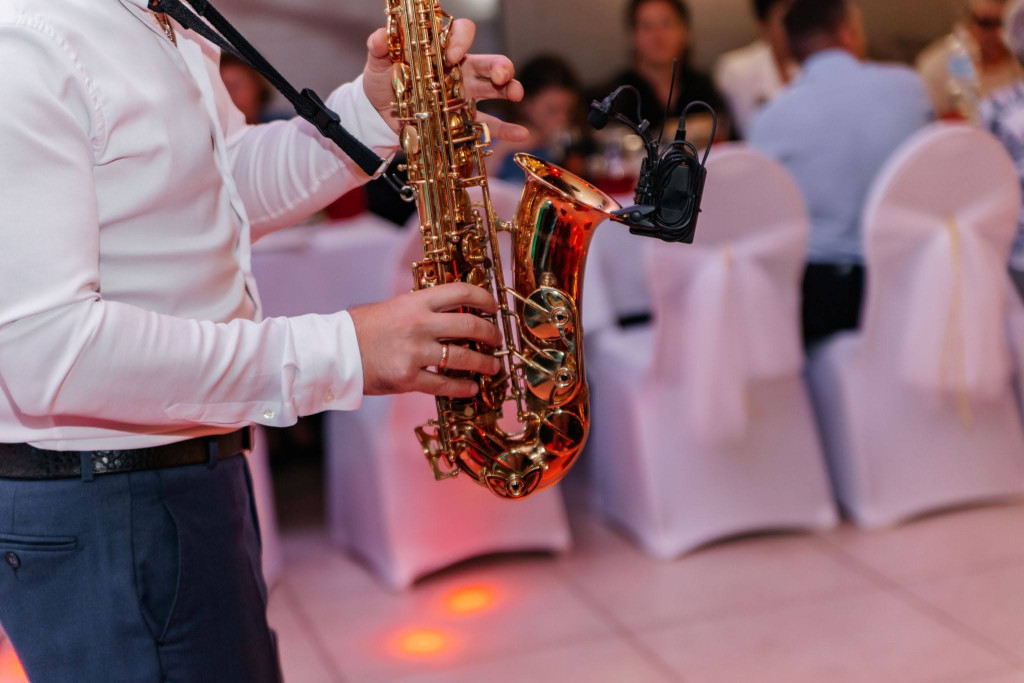
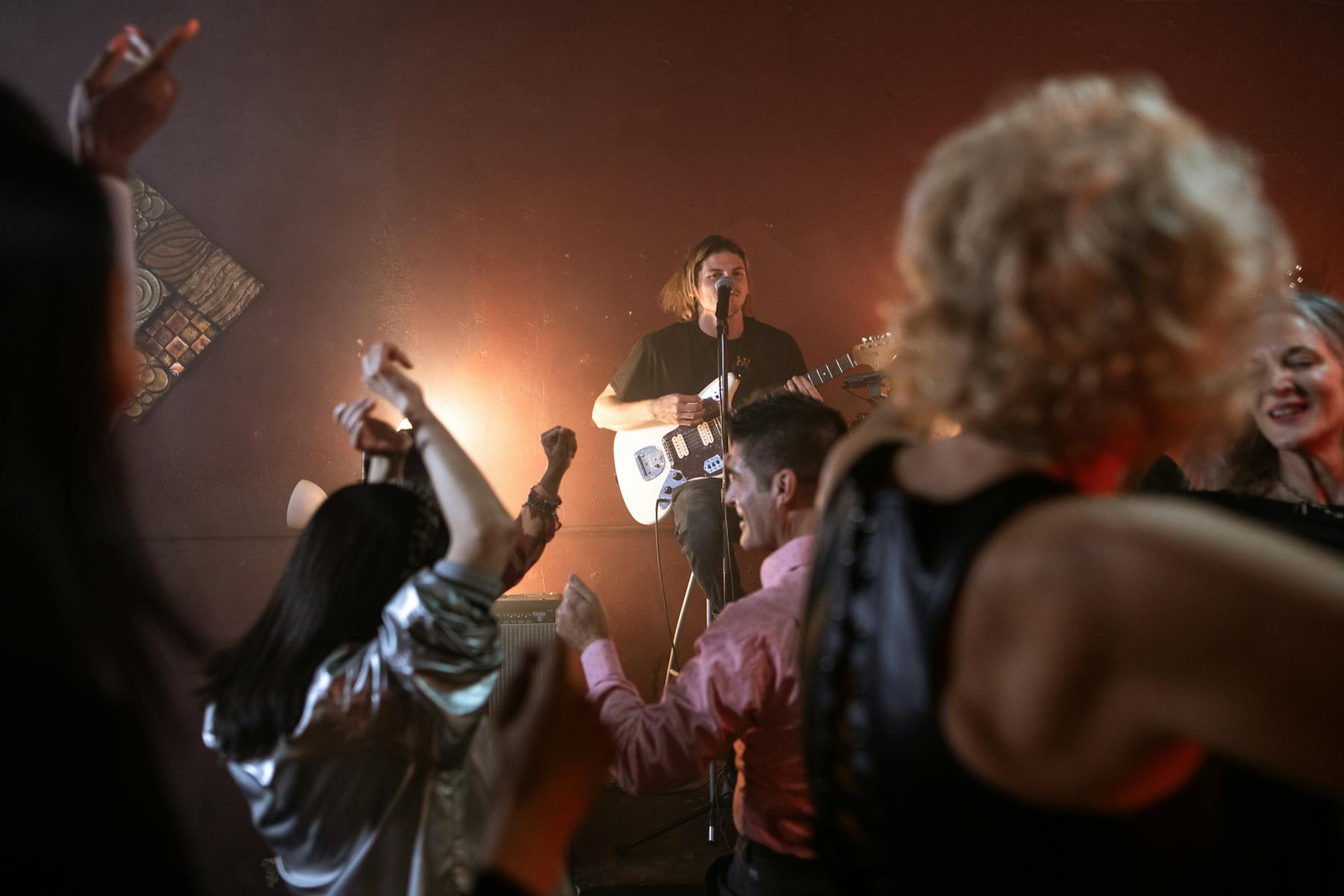
A live band performing at a corporate holiday party

A live band is the most memorable holiday party entertainment because it turns the room into a concert your team shares. Professional party bands read the crowd, move from polished dinner music to full dance sets, and handle a mixed-age room of executives, managers, and new hires.

For corporate holiday parties, look for a band that:

  • Plays across generations. Motown, ’80s and ’90s hits, and today’s chart-toppers keep everyone on the floor, not just one department.
  • Works around your program. A professional band pauses cleanly for the CEO’s toast or awards, then brings the energy right back up.
  • Brings its own production. Premier bands arrive with sound engineers and equipment, so your party sounds like a show, not a conference room.

A live band is also where a holiday party budget buys the most atmosphere. Professional acts booked through Green Light Booking typically range from $7,500 to $20,000+, depending on band size, location, and performance length.

Why a DJ for Your Holiday Party Works

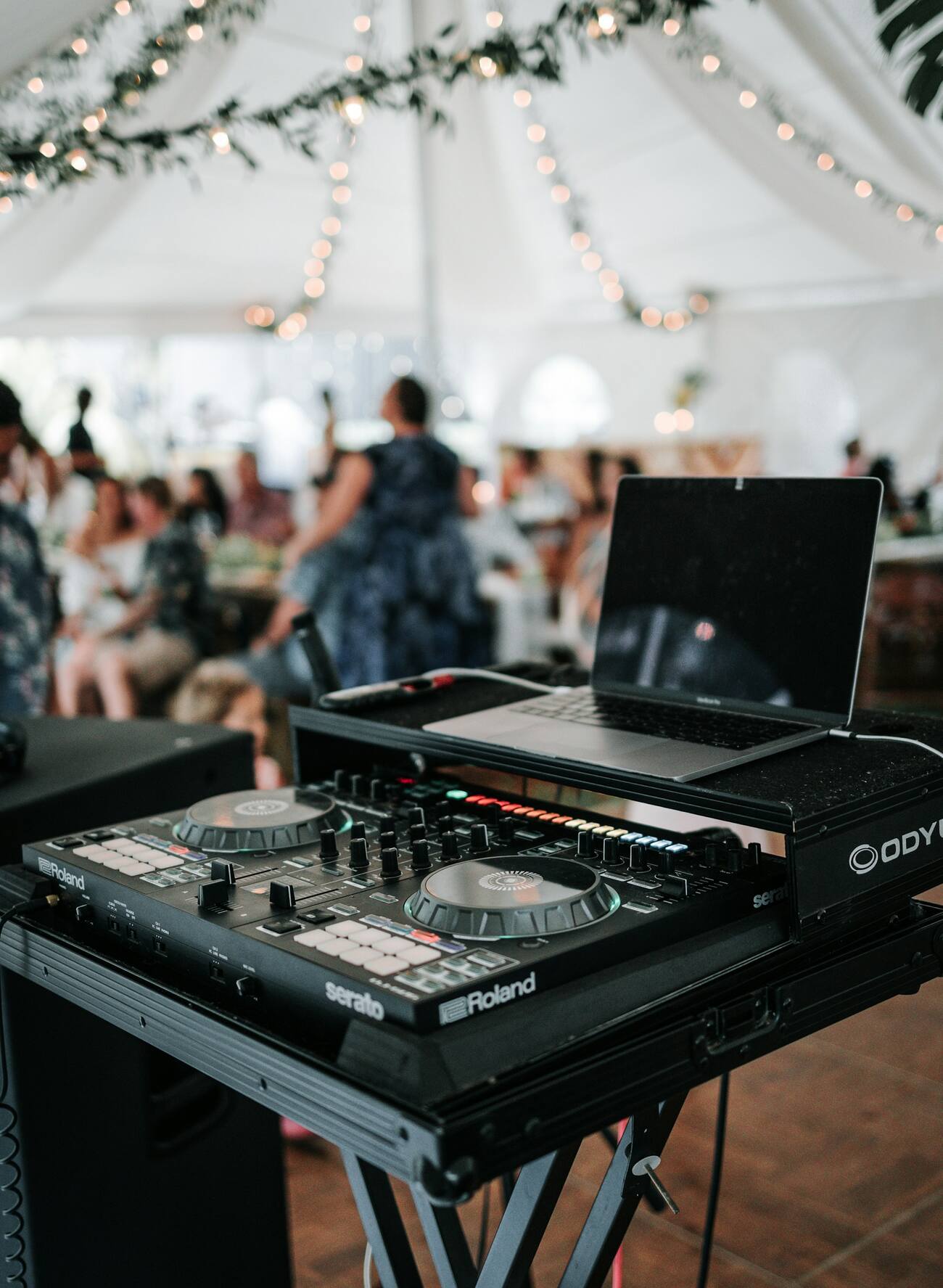
Corporate holiday party ideas with confetti, DJs, and drinks

A DJ for a holiday party is the most flexible way to keep people dancing all night. A DJ can play thousands of songs, take requests on the spot, and fit into smaller venues where a full band won’t.

DJs are especially strong for:

  • Younger teams who want current hits and club-style mixes.
  • After-parties that continue once the main event wraps.
  • Band breaks, so the energy never drops between sets.

A hybrid lineup is often the best of both worlds. Some of our bands blend live musicians with DJ-driven beats, so you get the energy of a band with the range of a DJ in a single booking. Explore our DJs in Utah or ask your point of contact about hybrid acts.

Hire a Corporate Comedian for a Shared Laugh

A corporate comedian gives a holiday party a moment everyone experiences together, which is especially valuable for teams that won’t all hit the dance floor. A good corporate comedian keeps material clean, can work in light company-specific humor, and knows how to read a room full of colleagues.

The sweet spot is a 20- to 45-minute set after dinner and before dancing, when guests are seated and relaxed. Share any off-limits topics in advance, and ask whether the comedian can tailor a few jokes to your industry or year. See our corporate comedians.

Jazz, Strings & Christmas Music for Cocktail Hour

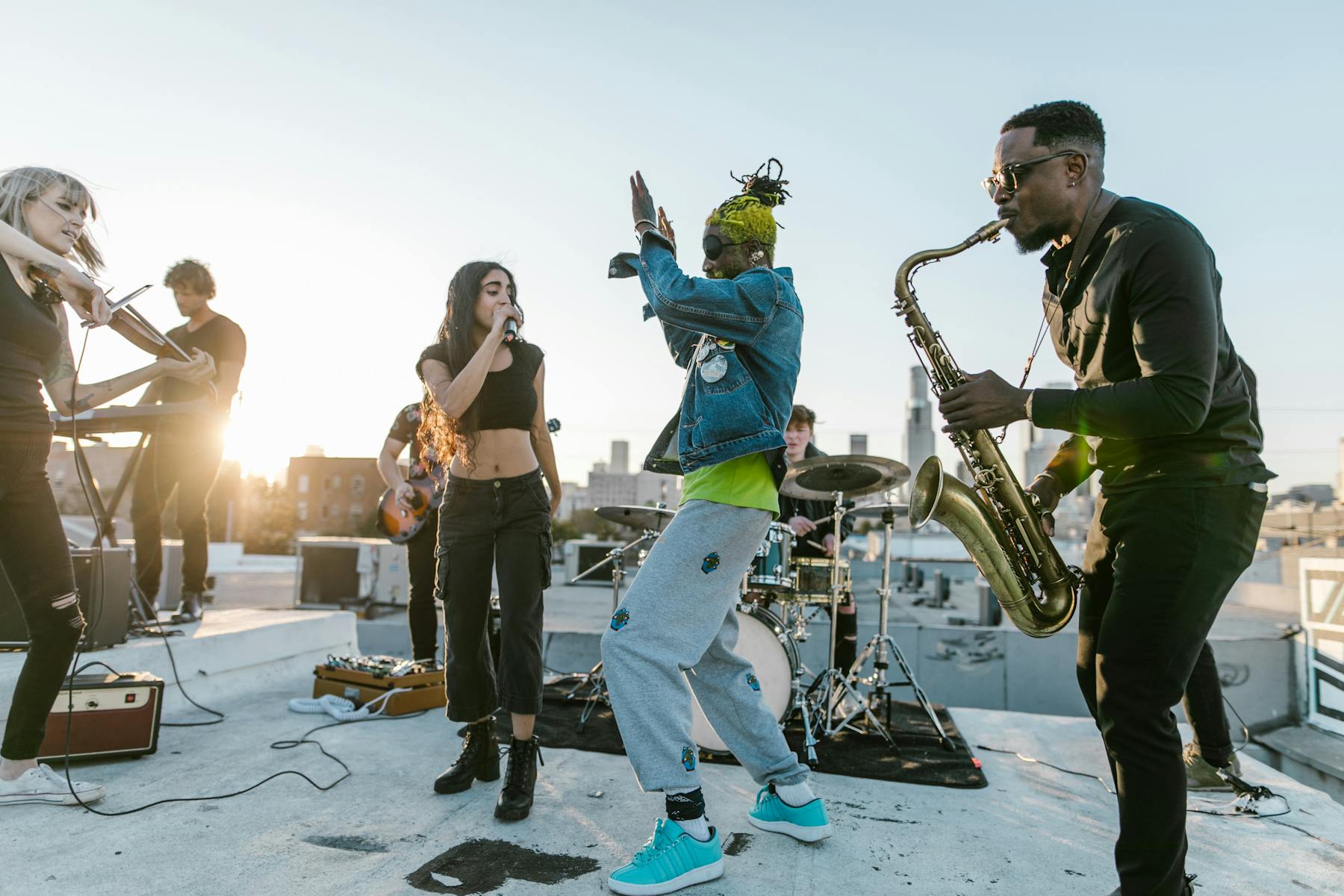
High-energy band playing outdoors with saxophone and vocals

Jazz combos, string ensembles, and Christmas music set a festive, sophisticated mood for arrivals, cocktails, and dinner without competing with conversation. They’re also ideal for client-facing events, where the goal is connection rather than a dance party.

A jazz trio playing holiday standards, a string quartet with seasonal arrangements, or a vocalist crooning Sinatra-era Christmas classics can carry the first half of the night. Then a band or DJ takes over for dancing. Browse our Christmas entertainment and jazz bands.

Planning a December party? The best acts book first.

Corporate Holiday Party Themes and the Entertainment to Match

Corporate holiday party themes work best when the entertainment is part of the concept, not an afterthought. Here are six themes, each paired with the act that makes it feel real.

Theme #1: Roaring ’20s Holiday Gala

A swing band or Sinatra-style crooner makes a Great Gatsby–inspired night feel authentic. Pair art deco décor and black-tie attire with an act like Paul Cave & The Platinums or the vintage Gypsy jazz of Hot House West.

Theme #2: Winter Wonderland

A white-and-silver setting pairs naturally with a string ensemble for cocktails and a polished party band for dancing. Keep the music elegant early, then let the band build to a celebration.

Theme #3: Decades Dance Party

Assign each table or department a decade and let a versatile cover band play hits from all of them. Bands like Metro Music Club® cover Motown through today’s Top 40, so every decade gets its moment.

Theme #4: Après-Ski Lodge Party

Flannel, fire pits, and hot toddies call for a band or hybrid band-DJ act with a relaxed, feel-good setlist that builds as the night goes on. It’s a strong fit for mountain venues and cozy restaurant buyouts.

Theme #5: Country Western Christmas

Swap the ballroom for boots and a line dance. A country-pop band like Rhinestone Rodeo® keeps the country fans happy and the pop fans dancing.

Theme #6: Holiday Karaoke Night

For teams who love the spotlight, a live karaoke band lets guests sing lead with real musicians behind them. It’s interactive, memorable, and perfect for a department party.

Happy colleagues celebrating Christmas

Company Holiday Party Ideas for Every Team Size

The right company holiday party ideas scale with your headcount. What delights a team of 15 can feel empty in a ballroom of 500.

Under 30 Guests: Small Team Christmas Party Ideas

For team Christmas party ideas at a small scale, think restaurant private rooms and intimate entertainment. A guitarist, a jazz duo, or a short comedy set creates a special atmosphere without overwhelming the space.

30–150 Guests: Mid-Size Work Holiday Party Ideas

Most work holiday party ideas land here. A DJ or a compact party band keeps a mid-size group dancing, and adding cocktail-hour musicians makes the night feel elevated without a gala budget.

150+ Guests: Large Company Holiday Parties and Galas

Large events benefit from a full party band with professional production, a planned program for speeches and awards, and a layered entertainment schedule. This is where a booking partner saves the most time, because the logistics multiply fast.

Client Appreciation Event Ideas for the Holidays

Client appreciation event ideas should prioritize conversation and a premium feel, since the goal is to thank clients and strengthen relationships. Entertainment should enhance the evening without drowning out the conversations you’re hosting the event to have.

  • Elegant cocktail reception: A jazz trio or string quartet playing holiday standards while clients mingle.
  • Private dinner with a feature act: A crooner, an acclaimed violinist, or a short set from a comedian between courses.
  • Holiday concert experience: A standout band for a VIP audience, with seated listening before an optional dance set.

For client events, choose acts with a record of corporate performances, and confirm volume levels with your point of contact ahead of time.

How to Plan and Book Holiday Party Entertainment

Planning holiday party entertainment is simplest when you work backward from your date. Use this timeline to stay ahead of the December rush.

When What to do
6–12 months out Set your date, headcount, and budget; book your headline entertainment
3–4 months out Confirm your theme, venue layout, and any add-on acts (cocktail musicians, comedian)
6–8 weeks out Share your run of show: arrivals, dinner, speeches, awards, dancing
2–4 weeks out Send must-play and do-not-play song lists; confirm load-in and power with the venue
Party day Let your point of contact and the band handle setup and timing

How Green Light Booking Makes It Easier

Booking entertainment for a holiday party usually means comparing acts, chasing availability, negotiating contracts, and coordinating with the venue, all during the busiest season of the year. Green Light Booking handles all of it:

  • One point of contact for every act on your night, from cocktail-hour musicians to the headline band.
  • Personally vetted talent, screened for vocals, energy, and professionalism with corporate audiences.
  • Contracts, logistics, and production (sound, lighting, and staging) coordinated for you.
  • Backup plans if the unexpected happens, so your party stays on schedule.

With 18+ years and 10,000+ events behind us, we know which acts fit which rooms. That means less time researching and more time enjoying your own party.

Make This Year’s Holiday Party the One Everyone Talks About

The right holiday party entertainment turns a year-end obligation into a celebration your team actually looks forward to. Tell us your date, your crowd, and your vision, and we’ll match you with the band, DJ, comedian, or musicians that fit.

Frequently Asked Questions

How far in advance should I book holiday party entertainment?

Book 6–12 months in advance for December Friday and Saturday dates, which are among the most competitive of the year. Weeknight and early-December parties often have more availability, so reach out even on a shorter timeline.

How much does a band cost for a company holiday party?

Professional party bands booked through Green Light Booking typically range from $7,500 to $20,000+, depending on band size, location, and performance length. DJs, comedians, and solo musicians vary widely, so request a quote for your specific lineup.

Should I hire a band or a DJ for my holiday party?

Choose a live band for the biggest energy and a shared “concert” moment, and a DJ for maximum song variety, requests, and smaller spaces. Many companies book both, with the DJ covering band breaks or an after-party.

Is a comedian a good idea for a work holiday party?

Yes, if the comedian specializes in clean corporate material. Keep the set to 20–45 minutes after dinner, and share off-limits topics in advance so the humor brings the team together.

What are good holiday party entertainment ideas for clients?

For client appreciation events, choose entertainment that supports conversation: a jazz trio, a string quartet, or a featured vocalist during cocktails and dinner. Save high-volume dance sets for later in the evening, if at all.
Holiday Party Entertainment Ideas That Make Your Company Party Unforgettable2026-10-06T14:27:21-06:00

Best Party Band Songs Of All Time

Best Party Band Songs Of All Time: Crowd‑Proof Picks That Never Fail

A great party band playlist does more than fill time. It builds a night, track by track, from casual mingling to arms‑in‑the‑air sing-alongs. The best party band songs cross generations, invite call‑and‑response, and keep energy high without exhausting the room.

This guide gives you evergreen hits and smart modern choices, plus an easy way to communicate the vibe you want to the band you hire. You’ll also get a simple music licensing note so you can plan confidently with your venue.

Party band performing the best party band songs live as crowd dances near the stage

TL;DR

  • The best party songs are instantly recognizable, easy to sing, and sit in a dance friendly tempo range.
  • Mix eras for your guest list, like Motown/disco for all ages, 90s–2000s for nostalgia, plus a few current hooks to feel fresh.
  • Ask your band if they can use medleys (short, back-to-back snippets) and plan an “energy arc” across the night (warm-up → peak → finale).
  • In the U.S., ask your venue whether they maintain the necessary music licensing coverage for live performances (most venues that host music do, but don’t assume)

What Makes a Party Band Song Work

The best floor‑filling party band songs check three boxes: familiarity, groove, and payoff. Familiarity means the hook lands in the first 30 seconds. Groove lives in the rhythm section and tempo. Most party sets feel best in a dance-friendly tempo range (often roughly 92-130 BPM), but great bands can also make faster songs work by changing the feel (half-time/double-time) and reading the room.

Payoff comes from a chorus people want to shout. Lean on call‑and‑response moments, classic breakdowns, and endings you can button cleanly. Keep intros short, cut dead air between tunes, and carry a couple of family‑friendly edits.

Want a band that can actually deliver these songs live (and tailor them to your crowd)? Green Light Booking will match you with a proven party band based on your event theme, audience, and budget needs.

Timeless Floor Fillers By Era

Check out these essential hits across decades to help you build a setlist that resonates with every generation in the room. Utilizing a chronological approach ensures that your selection of the best party band songs bridges the gap between nostalgic classics and modern chart-toppers.

Sixties to Eighties Evergreens

These are cross‑generational anchors. Why they land: tight grooves, choruses everyone knows, and strong call‑and‑response sections. They work at weddings, festivals, and corporate shows.

  • “September” by Earth, Wind & Fire
  • “Superstition” by Stevie Wonder
  • “Dancing Queen” by ABBA
  • “Shout” by The Isley Brothers
  • “Twist And Shout” by The Beatles
  • “Proud Mary” by Ike & Tina Turner
  • “Billie Jean” by Michael Jackson
  • “Sweet Caroline” by Neil Diamond
  • “Don’t Stop Believin’” by Journey
  • “I Wanna Dance With Somebody” by Whitney Houston

Nineties and 2000s Unifiers

These light up millennials and still play well with older crowds. Pro tip: run Mr. Brightside into Don’t Stop Me Now for nonstop belt‑along energy.

  • “This Is How We Do It” by Montell Jordan
  • “No Diggity” by Blackstreet featuring Dr. Dre
  • “Wannabe” by Spice Girls
  • “Livin’ La Vida Loca” by Ricky Martin
  • “Mr. Brightside” by The Killers
  • “Hey Ya!” by Outkast
  • “All The Small Things” by blink-182
  • “Crazy In Love” by Beyoncé
  • “Valerie” by Mark Ronson featuring Amy Winehouse version
  • “Yeah!” By Usher

2010s to Now: Modern Musts

These tracks slot into the same 100-128 BPM pocket and transition cleanly. Keep it current without losing the room.

  • “Uptown Funk” by Mark Ronson featuring Bruno Mars
  • “Shut Up And Dance” by WALK THE MOON
  • “Can’t Stop The Feeling!” By Justin Timberlake
  • “Shake It Off” by Taylor Swift
  • “24K Magic” by Bruno Mars
  • “Shape Of You” by Ed Sheeran
  • “Levitating” by Dua Lipa
  • “Blinding Lights” by The Weeknd
  • “Higher Love” by Kygo & Whitney Houston
  • “I Gotta Feeling” by Black Eyed Peas

Wedding and All Ages Staples

When you need guaranteed smiles and full photos. Use line dance moments to reset the floor, then ramp back up with a medley.

  • “Signed, Sealed, Delivered (I’m Yours)” by Stevie Wonder
  • “My Girl” by The Temptations
  • “Brown Eyed Girl” by Van Morrison
  • “Respect” by Aretha Franklin
  • “We Are Family” by Sister Sledge
  • “Cupid Shuffle” by Cupid
  • “Cha Cha Slide” by DJ Casper
  • “Wobble” by V.I.C.
  • “Play That Funky Music” by Wild Cherry
  • “Everybody (Backstreet’s Back)” by Backstreet Boys
High-energy band playing outdoors with saxophone and vocals

The Setlist Pivot Guide

The fastest way to keep the dance floor full is hiring a band that can read the room and pivot in real time. Use this cheat sheet to describe what you want the band to do in key moments.

Situation On The Floor First Pick Backup Pick Why It Works
Mixed ages, early set “September” “I Wanna Dance With Somebody” Familiar hooks and mid‑tempo groove ease people up.
Millennials surging “Mr. Brightside” “Hey Ya!” Shout‑along chorus, then a rhythmic shake‑up.
Kids and grandparents together “Dancing Queen” “We Are Family” Clean lyrics, universal dance feel.
Crowd loves funk/R&B “Uptown Funk” “Superstition” Tight riffs, simple call‑and‑response.
Rock fans, late set “Don’t Stop Believin’” “Sweet Child O’ Mine” Big intros and an epic chorus payoff.
Floor thinning after a ballad “Shut Up And Dance” “Can’t Stop The Feeling” Immediate choruses, 120+ BPM reset.

If you’d rather not guess which band can handle multiple decades (and read the room in real time). We can shortlist options that fit your venue, audience, and budget.

Build Medleys and Momentum

A medley is a short sequence of song sections stitched together. When booking, ask whether the band performs medleys.

These quick song “runs” reduce downtime and keep guests dancing between choruses. A great band will handle the musical transitions. Your job is simply to approve the vibe and the “must-play” moments.

  • Motown Stack: My Girl → Signed, Sealed, Delivered → I Want You Back
  • Disco‑Pop Lift: Dancing Queen → September → Levitating
  • Y2K Party Run: This Is How We Do It → Yeah! → Crazy In Love

Use two‑bar count‑ins, keep the drummer’s click ready, and cue transitions with a hand signal.

Keys, Tempos, and Crowd Energy

Small adjustments keep guests happy. Great party bands will subtly adjust tempo, song order, and “singalong vs. dance” balance based on your crowd, without you needing to micromanage. When booking, tell the band whether you want a nonstop dance party, a mixed lounge-to-dance arc, or a big singalong finale.

Covering Songs and U.S. Performance Licenses

U.S. copyright law treats music as a “public performance” when it’s performed in a place open to the public, or where a substantial number of people outside a normal family/social circle are gathered.

In many cases, venues and businesses that regularly host music maintain blanket licenses through performing rights organizations (PROs). PRO guidance commonly places licensing responsibility on the business that uses music to entertain customers.

What to do: ask your venue (or planner) whether they have PRO coverage for live music and include “music licensing confirmation” in your venue checklist. (This is a venue question most clients handle once. Your band can then focus on the performance.)

Examples

This section illustrates how to strategically sequence high energy tracks to maintain a packed dance floor throughout different event types.

Saturday Wedding, Historic Hotel

The band starts with cocktail hour jazz, then opens the reception set with Signed, Sealed, Delivered to get cameras out. After toasts, the floor rebuilds with Dancing Queen and September.

As the room warms, the band fires a Y2K medley: This Is How We Do It → Yeah! → Crazy In Love. When energy peaks, they drop into a group‑friendly Wobble, then close with Don’t Stop Believin’ for that big, hand‑in‑the‑air chorus. The venue confirms its PRO licenses in advance, so the band focuses on the show.

Corporate Holiday Party, Mixed Ages

Early in the night, the band uses Valerie and Uptown Funk at conversational volume. Once awards wrap, they punch into Shut Up And Dance, then a pop/rock run of Mr. Brightside and All The Small Things.

When executives hit the floor, they pivot to I Wanna Dance With Somebody and Levitating. A quick DJ style drum loop bridges to 24K Magic, then the encore is Sweet Caroline with a call‑and‑response outro everyone knows.

Actionable Steps / Checklist

These specific tasks help professional musicians organize their repertoire and technical setups to deliver a polished, stress-free performance.

  • Share your basics, including the date, venue, guest count, and the general age mix.
  • Send 5-10 must-plays and 5 “do not plays” (include any cultural/family favorites).
  • Confirm key moments such as grand entrance, first dance, parent dances, awards, announcements, and finale song.
  • Decide your pacing, whether it’s nonstop dance party vs. lounge-to-dance arc vs. singalong heavy.
  • Confirm logistics with the venue, like the load-in time, stage space, power access, sound limits/curfew.
  • Ask whether the band provides break music and an emcee for announcements.
  • Ask the venue whether it maintains U.S. performance licensing coverage for live music.
  • Put your timeline and song priorities in writing so the band can build the night around your crowd.
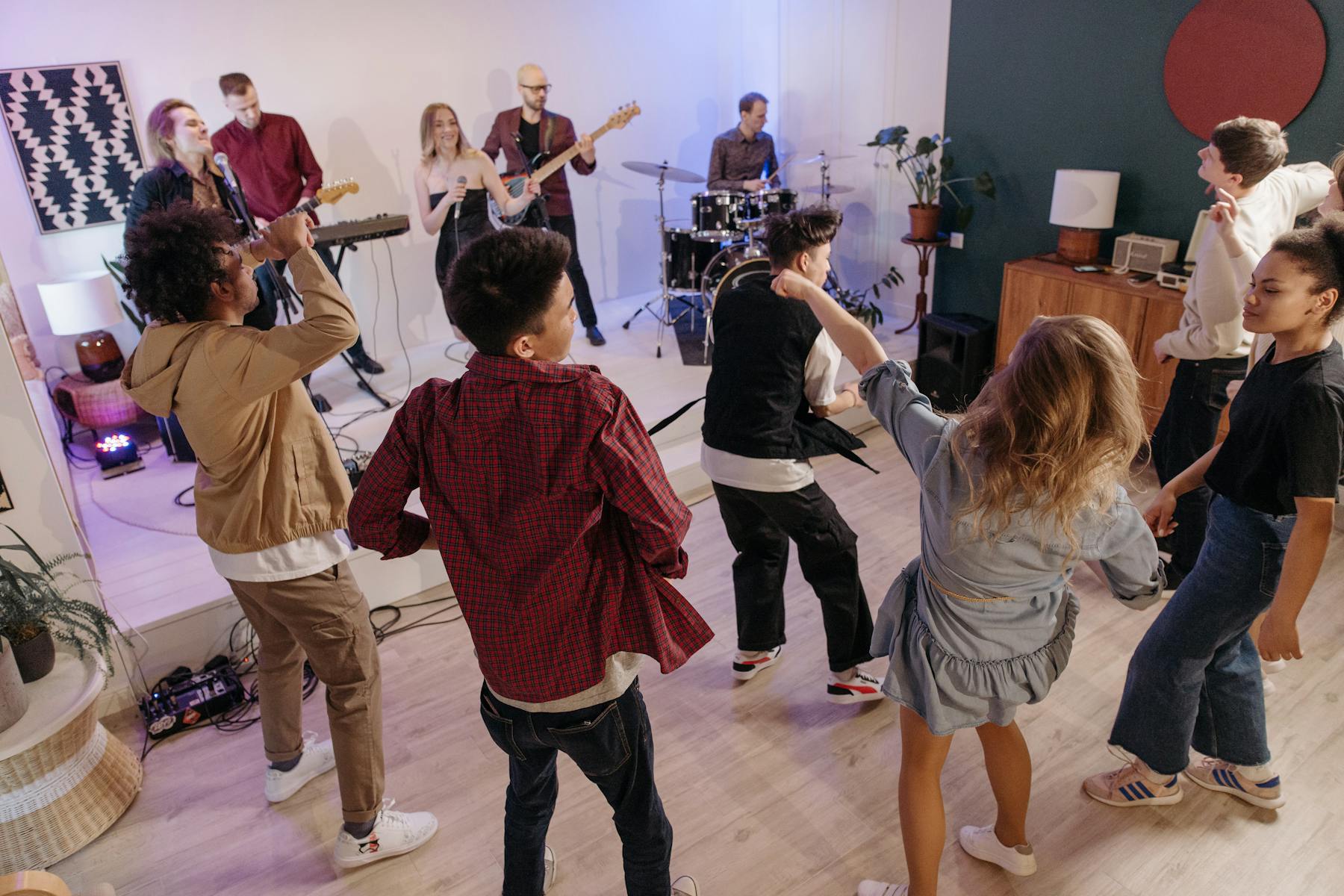
Guests dancing in front of a live party band at an indoor event

Glossary

These definitions provide a common language for discussing the technical nuances that elevate a standard setlist into a professional live experience.

  • BPM: Beats per minute; a simple measure of musical speed.
  • Tempo: How fast a piece is performed; often described using BPM.
  • Medley: A seamless sequence of short sections from multiple songs.
  • Mashup: Two songs performed at the same time by aligning key and tempo.
  • Call‑And‑Response: A lead line answered by the crowd or band.
  • Public Performance: Playing or singing a work in a place open to the public or for a gathering outside a normal family or social circle in the U.S.
  • PRO: A performing rights organization that licenses public performances of songs.
  • Breakdown: A sparse section that strips to drums, bass, or vocals for dynamics.

FAQ

Q: What tempo range works best for dancing?
A: Most sets live around 92-130 BPM for pop, funk, and rock. Jump higher for hype moments and dip mid‑tempo for breathers.

Q: Do we need permission to cover famous songs at events?
A: Usually, the venue or event organizer holds a blanket license from a PRO. Confirm this ahead of time because public performances require authorization.

Q: How many new songs should we include?
A: Sprinkle 3-5 current hits per night and lean on proven classics to keep the widest crowd engaged.

Q: Do bands accept song requests?
A: Live bands often accept song requests, although with boundaries. Most bands keep a short request list and park niche picks.

Q: How long should each set be?
A: Common formats are three 45‑minute sets or two 60‑minute sets with tight transitions and a planned finale.

Final Thoughts

A great party band set is a story with chapters. Blend eras, control tempo, and give people hooks they cannot resist. With a smart plan and a few flexible medleys, you will keep the floor full from first chorus to last shout.

Ready to lock in live music that fits your crowd? Green Light Booking offers a curated selection of party bands for weddings, corporate events, and private parties across the U.S. and worldwide. Reach out to get matched to the right band for your budget and vision.

Best Party Band Songs Of All Time2026-05-23T14:57:04-06:00

Party Band vs Cover Band: Which One Should You Pick

Party Band vs Cover Band: Which One Should You Pick?

Live music can transform a good event into a great one. The right band keeps people smiling, moving, and talking about your party the next day. The tricky part is that “party band” and “cover band” often overlap. Many party bands are cover bands, just packaged for nonstop energy and crowd interaction.

If you’re booking entertainment for a wedding, corporate event, or private party, Green Light Booking can match you with the right band based on your event needs, budget, and vision, and help you lock in the details that make the night run smoothly.

Guests chatting in front of a live band at an indoor event

TL;DR

  • Pick a party band if you want wall-to-wall dancing, seamless medleys, and a hype, interactive vibe (often with concert-style production).
  • Pick a cover band if you want recognizable hits your guests love, whether that’s a laid-back “live soundtrack” or a full dance-floor show (energy level depends on the band).
  • Size, production, and crowd work tend to be bigger with party bands. Customization and set control are often easier with cover bands.
  • Confirm logistics early, including set lengths, sound, backline, breaks, and who handles music licensing at the venue.

What Each Band Type Means

If you’re comparing band types for an event, the labels can get confusing because there’s overlap. A simple way to think about it: a party band is usually a cover band built for nonstop dancing and audience interaction, while “cover band” is a broader category that can range from chill to high energy.

This guide breaks down the real differences that affect your night (energy, pacing, production, and logistics). If you want a shortcut, Green Light Booking can curate a shortlist of proven bands and help you choose based on your venue, guest count, timeline, and budget, so you don’t waste time chasing bands that aren’t the right fit.

What Is a Party Band?

A party band focuses on high‑energy dance music that keeps the floor packed. They string songs into medleys and mashups so momentum never dips.

Many add choreography, multiple vocalists, and horn sections for a showy, almost concert‑like experience. Their specialty is reading the room fast and shifting genres across decades without stopping.

What Is a Cover Band?

A cover band performs recognizable songs by other artists. The goal is to deliver recognizable songs guests can sing along to, sometimes note-for-note, and sometimes with a fresh, modern arrangement.

Some cover bands lean toward country, rock, others toward pop, funk, or Motown, and many can cover multiple decades to fit mixed-age crowds at weddings, corporate events, and private parties. A related niche is the tribute band, which centers on one artist or era. If you want variety for dancing, ask for general cover sets rather than a single artist tribute.

Technical Comparison: Party Band vs Cover Band

The biggest differences show up in pacing, crowd interaction, and production. Party bands typically run transitions tightly and keep the flow continuous. Cover bands usually leave space between songs to talk to the crowd, tune, and take requests. With that, expectations for staging, wardrobe, and sound can vary.

Factor Party Band Cover Band
Primary Goal Nonstop dancing and hype Faithful hits and broad appeal
Repertoire Style Medleys, mashups, tight segues Song‑by‑song with space between
Crowd Interaction High energy MC work, call‑and‑response Friendly banter, requests, dedications
Typical Lineup Larger: multiple singers, horns, dancers Varies: can be a tight 4–6 piece or expand with horns/vocals for bigger events
Production Needs Bigger PA/lighting, choreo spacing Varies: some use house sound; others bring full sound/lighting depending on the event
Flexibility During Show Quick genre pivots within medleys Adjustable set order and pacing
Best Fit Weddings, corporate galas, big parties Weddings, corporate events, private parties, festivals, or anywhere you want recognizable hits (energy depends on the band)

How to Match Band Type to Your Event Goals

Start with the outcome you want.

  • If your top priority is a packed dance floor from the first chorus to the last song, a party band is built for that sprint.
  • If you want sing-alongs, toasts, and a little breathing room between high points, a cover band often fits better.

Think about your crowd mix. Multi‑generational events benefit from a band that moves across decades.

  • Both band types can do this, but party bands typically blend eras faster while cover bands may curate eras in distinct blocks.
  • For corporate events where you need to please many tastes and end on time, a party band can deliver tight show control.
  • For a neighborhood festival with rotating acts and casual flow, a cover band gives you flexible pacing.

If you tell us your top priorities (nonstop dancing vs. more flexible pacing, plus any “must-play” styles), Green Light Booking can recommend specific party bands and cover bands that already perform well for your type of event. We can also share live videos/setlist direction so you can compare confidently.

Budget and Pricing Factors

Costs vary widely based on lineup size, travel, date, and production, but here’s the usual difference:

  • Party bands often bring more people and gear (extra vocals, horns, choreography, bigger sound/lighting), so plan for higher fees and more staging.
  • Cover bands can be more budget-friendly, especially in smaller lineups, and may more easily adapt to a venue’s house sound system if one is available.
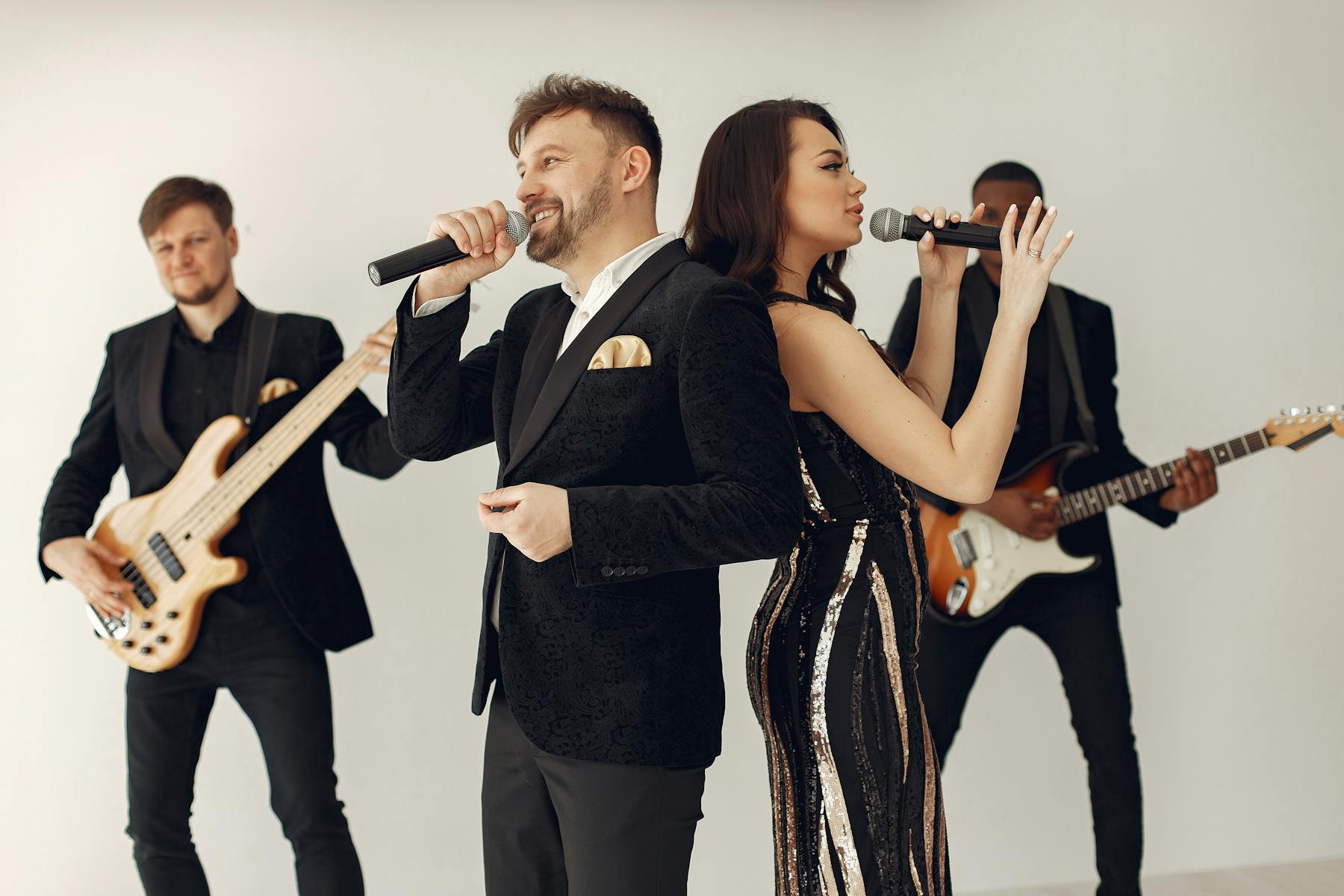
Live band singing with microphones in formal attire

Event Logistics

Get logistics in writing, because this is where expectations can diverge:

  • Set length: Both party bands and cover bands commonly play 3 × 60 minutes or 4 × 45 minutes with short breaks. Party bands often structure sets for continuous dance-floor flow (tight segues/medleys), while cover bands may build in more space for announcements, requests, or pacing shifts.
  • Backline: Both need standard backline (drums, amps, keyboards, and the like), but party bands with larger lineups may require more inputs, more mic channels, and more stage real estate. Cover bands, especially smaller ones, may have a simpler stage plot and faster changeovers.
  • Soundcheck + load-in: Both require a soundcheck and coordinated load-in, but party bands with bigger production (lighting, tracks, multiple vocalists/horns) often need more setup time and more power and patching. Cover bands may be able to move more quickly if they’re using the venue’s system and a smaller rig.

Contracts and Music Licensing

Public performances of copyrighted songs generally require a license. Many venues already hold blanket licenses from performing rights organizations like ASCAP, BMI, and SESAC, but you should confirm in writing whether that coverage applies to your event.

If your event is open to the public or ticketed in a commercial space, assume a PRO license is required and make sure the responsible party is named in your contract. Also, don’t use a personal streaming account like Spotify for public playback.

Consumer terms are typically limited to personal, non-commercial use. If you’re working with Green Light Booking, we’ll help ensure the licensing responsibility is clear and handled appropriately so you can focus on your guests.

Red Flags and Green Flags When Choosing Between a Party and a Cover Band

Here are a few green flags to look for when booking a band:

  • Recent, unedited live videos and a current song list.
  • Clear communication on set lengths, breaks, and production.
  • A simple, professional contract with a payment schedule and cancellation terms.

Watch out for these red flags:

  • Only studio‑polished clips with no live proof.
  • Vague answers about sound, load‑in, or power needs.
  • No plan for learning first dance or special request songs when promised.

Don’t want to vet alone? Green Light Booking works with a curated roster of proven performers and can help verify live footage, set formats, and production needs before you commit.

Examples

Seeing these real-world applications helps you visualize whether a high energy, medley based group or a traditional set-based ensemble fits your specific itinerary.

A Summer Wedding With a Short Dance Window

The couple had a tight 2.5‑hour reception with dinner, toasts, and a one‑hour dance block. A party band built medleys around the couple’s top 15 songs and scheduled quick transitions from toasts into a high‑energy first dance reprise.

Because the venue had a strict curfew, the band’s showcaller kept things on time and wrapped cleanly. Guests hit the floor within 30 seconds of the first dance switchup and stayed there.

A Community Street Fair With Mixed Ages

The organizer wanted familiar music across classic rock, 90s pop, and country, with plenty of mic time for sponsor shout‑outs. A 5‑piece cover band slotted three 45‑minute sets and left space for raffles and announcements.

They took requests from a signup sheet, brought a compact PA, and used the town’s stage. The pacing felt relaxed, the kids recognized choruses, and sponsors got the mic moments they needed.

Actionable Steps / Checklist

By ticking off these items, you can focus on the artistic differences between your options rather than getting bogged down by sudden venue or equipment surprises.

  • Define the room, including the guest count, ages, dance vs mingle, and any curfew.
  • Decide the vibe, whether it’s a concert‑like party or a classic live show with breaks.
  • Shortlist bands with live videos in similar rooms to yours.
  • Confirm set lengths, breaks, special‑song learning, and emcee duties.
  • Lock production, such as PA, monitors, lighting, stage size, and power.
  • Clarify backline and load‑in times with your venue contact.
  • Ask who handles music licensing for covers at the venue.
  • Get a simple contract that lists date, times, lineup, fee, overtime, cancellation, and a substitution policy.
Concert singer performing on stage with audience and lights

Glossary

Clearly defining industry terms prevents confusion when discussing performance styles and technical riders with talent agents.

  • Party Band: A high‑energy group that uses medleys and crowd work to keep the dance floor full.
  • Cover Band: A band that plays songs by other artists, often aiming for faithful versions.
  • Tribute Band: A cover act focused on one artist or era, with matching look and sound.
  • Setlist: The planned order of songs for a show.
  • Medley: Several song sections blended into one continuous performance.
  • Backline: Onstage instruments and amps provided by the venue, festival, or band.
  • Soundcheck: Pre‑show testing to balance instruments and vocals.
  • Public Performance License: Permission required to perform copyrighted music in public; typically handled by venues in the US.

FAQ

Q: Can a cover band perform like a party band?
A: Cover bands can perform like party bands. Many cover bands can switch to medleys and tighter segues if you ask during planning.

Q: Do I need a license to have covers at my private event?
A: It depends on whether the event is considered “public” and whether the venue already has blanket PRO coverage. Some truly private, family-only celebrations can be treated differently, but rules and enforcement vary. Confirm with your venue and put the responsibility in writing.

Q: How long do bands usually play?
A: A common format for a band’s setlist is 3 x 60 or 4 x 45-minute sets with short breaks. You can add a DJ playlist or a band DJ in breaks.

Q: How far in advance should I book?
A: For peak dates, start 12 months out or more, if possible. Off‑peak or weekday events often book within a few months. If your date is soon, Green Light Booking can check availability across multiple qualified bands and present options that fit your timeline.

Final Thoughts

Both options can deliver a packed dance floor. Choose the band type that fits your pacing and production needs, then hire the specific group whose live videos make you smile. Clear logistics and a simple contract will do more for a great night than any single song.

Send Green Light Booking your event details (date, location, guest count, venue rules, and vibe). We’ll help you choose the right band type, confirm tech/logistics, and keep the booking process clean and organized.

Party Band vs Cover Band: Which One Should You Pick2026-03-10T03:47:27-06:00

Best Beach Wedding Songs: Top Picks for Real Weddings

Best Beach Wedding Songs for Real Weddings

Your soundtrack shapes how your beach wedding feels. The right songs make the walk down the aisle softer, the first kiss brighter, and the dance floor unforgettable. Curate a list that fits the seaside setting, your story, and the flow of the day.

This guide gives you smart picks and simple rules that work for real weddings. You will find easy song ideas at a moment’s notice, a clear comparison of DJ vs. band vs. DIY, and practical sound tips for wind, waves, and local regulations.

If you’re planning to hire a professional beach wedding DJ or live band, the song list is only half the job. Your entertainment team should also handle the flow (ceremony → cocktails → dancing), plan clean transitions, and make sure your audio holds up in wind and open air. Our booking team matches you with performers who can deliver the exact vibe you want, from acoustic ceremony music to a packed dance floor.

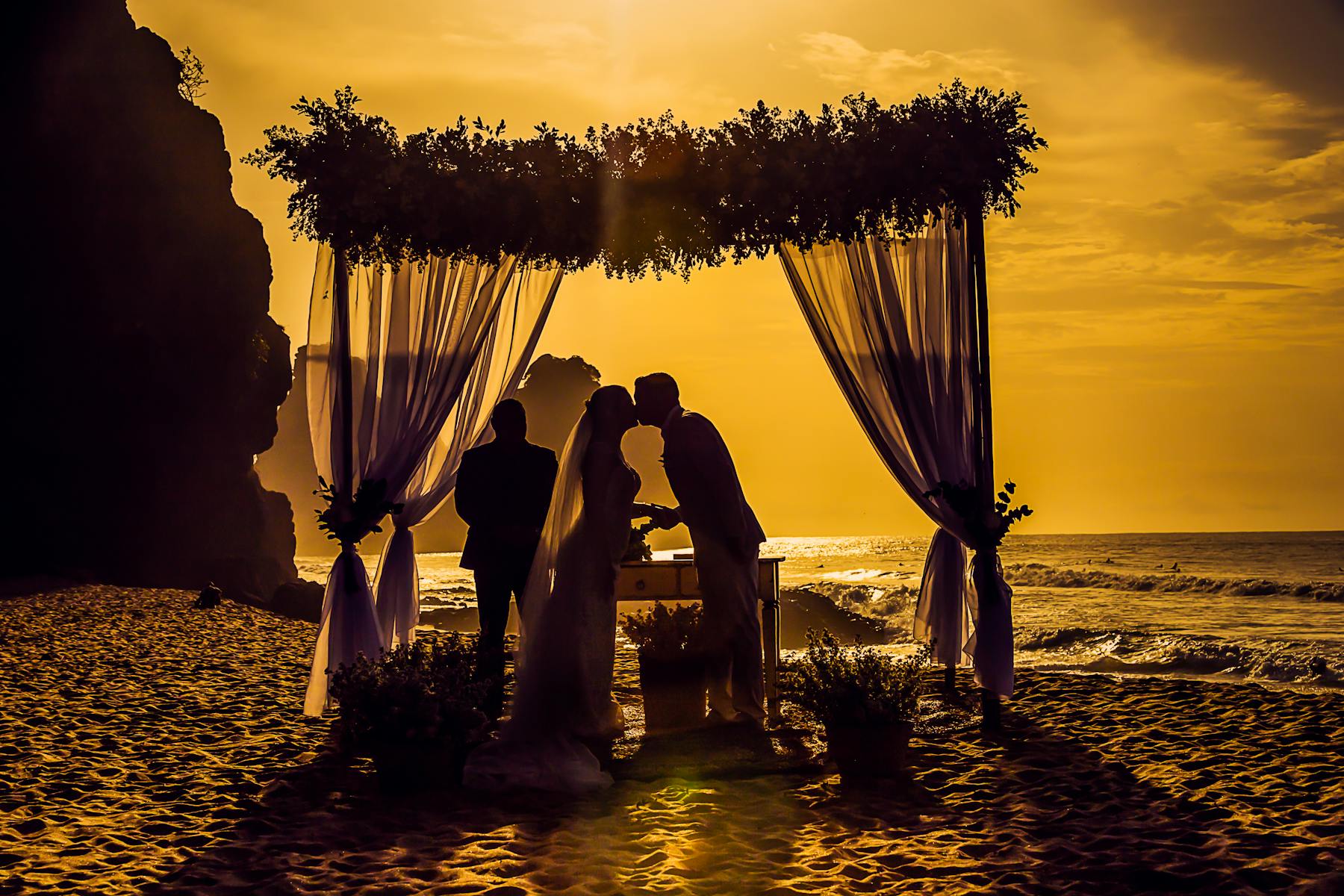
Silhouette of a couple kissing under a beach wedding arch at sunset

TL;DR

  • Match the moment to the music, like slow and tender for aisle walks, joyful and upbeat for the recessional, breezy and conversational for cocktails.
  • Favor acoustic, soul, reggae, bossa nova, and soft pop that feel natural outdoors. Save heavier bass for later in the night.
  • Protect the vibe with windshields on mics, battery speakers, and a clear backup playlist.
  • Music licensing varies by location. Many venues have blanket coverage, but don’t assume your DJ/band or a public beach automatically includes licensing, so confirm in writing who is responsible.
  • Choose the format that suits you, whether it’s a band for energy, a DJ for range, or DIY for control, then rehearse transitions.

How to Choose Beach Wedding Songs That Fit the Moment

Start with mood, and if you’re booking a DJ or live band, start by sharing that mood with your entertainment team so they can build the right flow for each moment. Picture each scene: the hush before the aisle, the kiss, sunset cocktails, and the spark when guests pack the dance floor. Pick songs that echo the light, warm feel of the beach.

Mind tempo, measured in beats per minute (BPM). Slower tempos suit a processional; mid‑tempo works for mingling, while faster songs lift the party. You don’t need precise numbers, only a sense of slow, medium, or fast.

Listen for clean lyrics and timeless melodies. Ocean noise blurs details, so simple hooks and clear vocals play better than dense production. Acoustic guitar, ukulele, piano, light percussion, and classic soul record well outdoors.

Ceremony Music: Processional, Vows, and Recessional

The processional is the entrance down the aisle; the recessional is your joyful exit. Keep ceremony songs intimate, then end with something bright.

If you want live ceremony music, we can book acoustic performers for the beach ceremony and transition you into the cocktail hour seamlessly. Here are processional music ideas:

  • “Somewhere Over the Rainbow/What a Wonderful World” by Israel Kamakawiwo’ole
  • “Can’t Help Falling in Love” by Kina Grannis
  • “Better Together” by Jack Johnson
  • “Here Comes the Sun” by The Beatles
  • “Turning Page” by Sleeping At Last

For vow or unity moment:

  • “River Flows in You” by Yiruma
  • “Come Away With Me” by Norah Jones
  • “Beyond” by Leon Bridges
  • “You Are The Reason” by Calum Scott
  • “First Day of My Life” by Bright Eyes

Here are ideas for the recessional spark:

  • “Signed, Sealed, Delivered (I’m Yours)” by Stevie Wonder
  • “You Are the Best Thing” by Ray LaMontagne
  • “Best Day of My Life” by American Authors
  • “Ho Hey” by The Lumineers
  • “This Will Be (An Everlasting Love)” by Natalie Cole

Cocktail Hour and Dinner: Sunny, Breezy, and Social

Aim for feel‑good and talk‑friendly music for the cocktail hour. In addition, think bossa nova, soft indie, light reggae, and beach‑pop for dinner music.

  • “The Girl from Ipanema” by Antonio Carlos Jobim
  • “I’m Yours” by Jason Mraz
  • “Three Little Birds” by Bob Marley
  • “Banana Pancakes” by Jack Johnson
  • “Riptide” by Vance Joy
  • “Budapest” by George Ezra
  • “Ocean Eyes” by Billie Eilish
  • “Firestone” by Kygo

First Dance and Parent Dances

Choose a first‑dance song that feels like you, not a trend. If the original is too fast or slow, use an acoustic cover or a custom edit.

These song recommendations can make the first dance the highlight of the night:

  • “Perfect” by Ed Sheeran
  • “All of Me” by John Legend
  • “At Last by Etta James
  • “I Get to Love You” by Ruelle
  • “The Luckiest” by Ben Folds

For your parent dances:

  • “What a Wonderful World” by Louis Armstrong
  • “Isn’t She Lovely” by Stevie Wonder
  • “My Girl” by The Temptations
  • “Stand by Me” by Ben E. King
  • “God Only Knows” by The Beach Boys

Dance Floor and Last Song

Kick off with a familiar favorite, then blend decades and styles so every guest gets a moment.

Start with these floor fillers:

  • “September” by Earth, Wind & Fire
  • “Levitating” by Dua Lipa
  • “Cake by the Ocean” by DNCE
  • “Uptown Funk” by Mark Ronson featuring Bruno Mars
  • “Shut Up and Dance” by Walk the Moon
  • “Mr. Brightside” by The Killers
  • “Hey Ya!” by Outkast
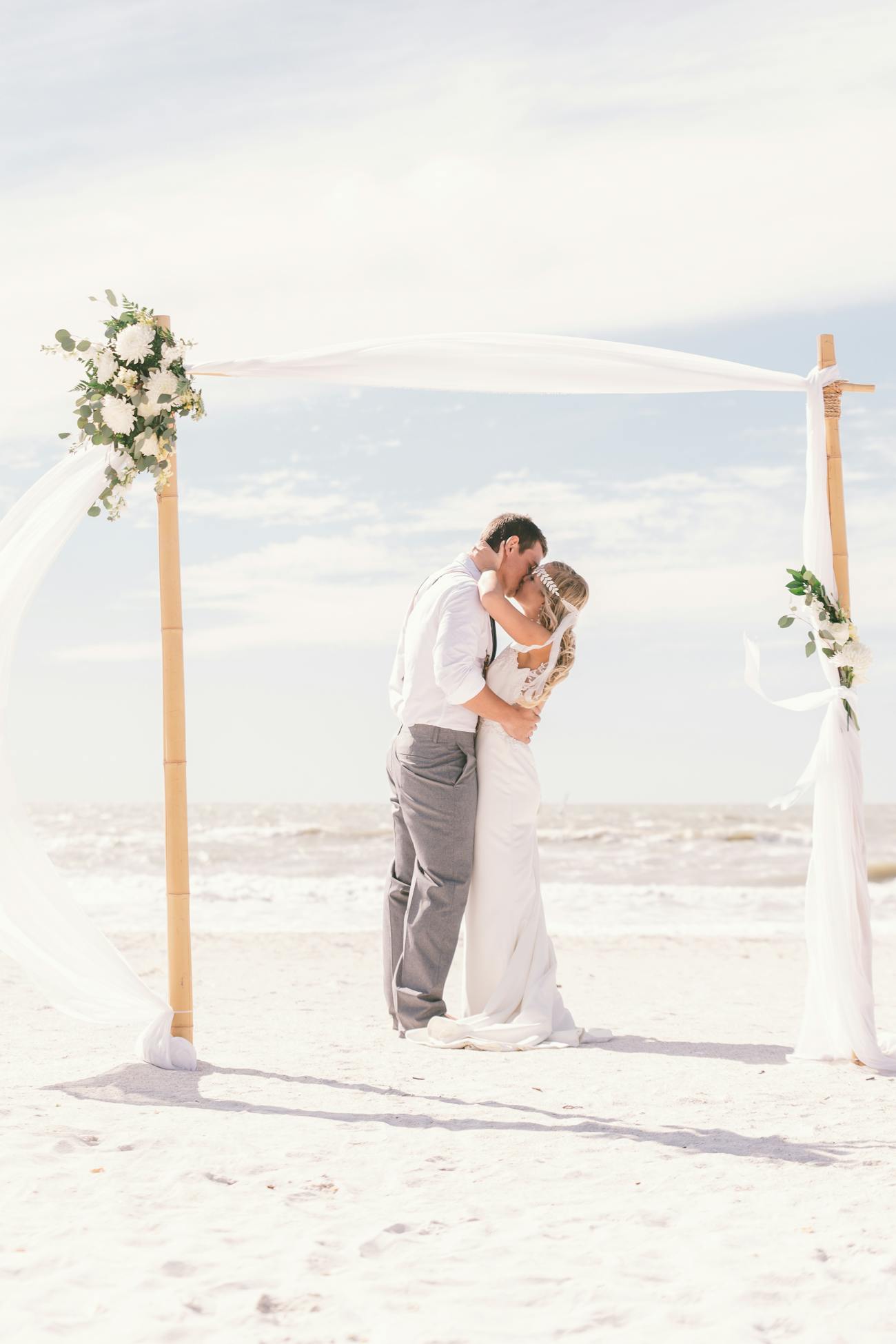
Bride and groom kissing beneath a simple beach arch with flowing white fabric

Cap off the night with these last dance or send‑off tunes:

  • “Home” by Edward Sharpe & The Magnetic Zeros
  • “You Make My Dreams (Come True)” by Daryl Hall & John Oates
  • “Closing Time” by Semisonic
  • “I Wanna Dance with Somebody” by Whitney Houston
  • “Don’t Stop Me Now” by Queen
  • “Livin’ on a Prayer” by Bon Jovi
  • “Happy” by Pharrell Williams

Beach Wedding Music Options: A Comparative Guide

Deciding on the right entertainment format is crucial for balancing your budget with the atmospheric needs and logistical constraints of a seaside wedding. Choose the format that fits your budget, taste, and logistics.

Option Why It Works Watch‑Outs
DJ Huge song range, clean transitions, easier wind/noise control, can read the room Vet beach experience; ask about battery power, mic windshields, backup gear
Live band Organic energy, great for soul/acoustic/island vibes, memorable photos Repertoire varies by band; confirm your must-plays and how many special requests are possible; also, confirm breaks and what plays between sets.
DIY playlist Full control, lowest cost, easy to pre‑time aisle walks Needs a trusted operator; plan crossfades and volume; bring spare cables, battery speakers, and offline files

Practical Sound Tips for Outdoor Beach Ceremonies

Ensuring the right audio setup is just as important as the music selection when planning an event on the sand. This section provides technical advice to make sure your chosen soundtrack is heard clearly over the wind and waves without any equipment failure.

  • Use lav mics for the officiant and at least one person at the couple’s position (or a second lav). Keep a handheld as a backup/for readings. Use proper wind protection and a high-pass filter to reduce rumble.
  • Bring battery or generator power and test at the exact location. Shade speakers so the gear does not overheat.
  • Angle speakers slightly toward guests, not the ocean, to reduce noise bleed.
  • Save bass-heavy tracks for later. Outdoors, you lose indoor ‘room gain’, so bass can feel different up close, but it can still carry far and impact nearby properties.
  • Confirm local noise limits and end times, especially in residential or public beach areas.
  • Keep an offline backup, including a phone in airplane mode with the full playlist downloaded, plus a spare cable and charger.

When you book professional entertainment, your contract should spell out sound needs (PA, setup time, and any production support).

Handling Music Rights Without Stress

In the United States, music played outside a normal circle of friends and family can count as a public performance, which is a right reserved to copyright owners. Many wedding venues hold blanket licenses with performing rights organizations (PROs) such as ASCAP, BMI, SESAC, or GMR, and many DJs work under that coverage.

For most couples, a simple, safe approach is to confirm in writing that the venue or entertainment provider is responsible for any required public performance license. If your ceremony is inside a house of worship, certain religious‑service exemptions may apply to that part of the day, but rules vary, and receptions are typically separate.

Examples

Studying these snapshots helps you visualize how specific songs and logistics work together to overcome the unique environmental challenges of a coastal venue.

Laid‑Back Sunrise Elopement

The couple tied the knot at 7:15 AM on a quiet public beach. A single battery speaker and a lapel mic covered the officiant and vows. The processional used an instrumental cover of Here Comes the Sun.

Vows played under light wave noise with no music; the recessional was Israel Kamakawiwo’ole’s medley. They skipped a first dance and shared coffee with a short playlist of Jack Johnson and Norah Jones. Simple gear and soft songs matched the moment and kept the setup to 10 minutes.

Sunset Party on the Pier

A 120‑guest wedding used a DJ for the ceremony and reception, plus a three‑piece acoustic trio for cocktails. Ceremony songs leaned toward acoustic pop. The recessional jumped to Signed, Sealed, Delivered to lift the mood.

During cocktails, the trio played bossa nova and island‑soul standards while the DJ set lights and tested the dance playlist. The reception opened with You Are the Best Thing, moved across decades, and closed with Home for a sway‑and‑sing send‑off. A written note from the venue confirmed license coverage and a 10 PM sound cutoff.

Actionable Steps / Checklist

This practical guide transforms the planning process into a series of manageable tasks, ensuring you don’t overlook critical details like wind protection for microphones or power backups.

  • Map your moments: Set out the processional, vows, recessional, cocktail hour, first dance, parent dances, open dancing, and last song.
  • Build a 2‑to‑1 buffer: For each segment, pick your must‑plays and add backups of a similar mood.
  • Choose your format: Pick a band, a DJ, or a hybrid setup, and confirm beach experience, power plan, setup time, and what plays during breaks.
  • Lock timing: Plan for aisle walk edits, fade points, and crossfades set to 8-12 seconds for smooth transitions.
  • Prep gear: Make sure your entertainer prepares their windshields, spare mics, charged batteries, shaded speaker placement, and offline playlists.
  • Confirm rights and rules in writing: Determine who handles any performance license, local noise limits, and end time.
  • Rehearse the aisle: Practice steps to the actual track so the entrance feels unhurried.
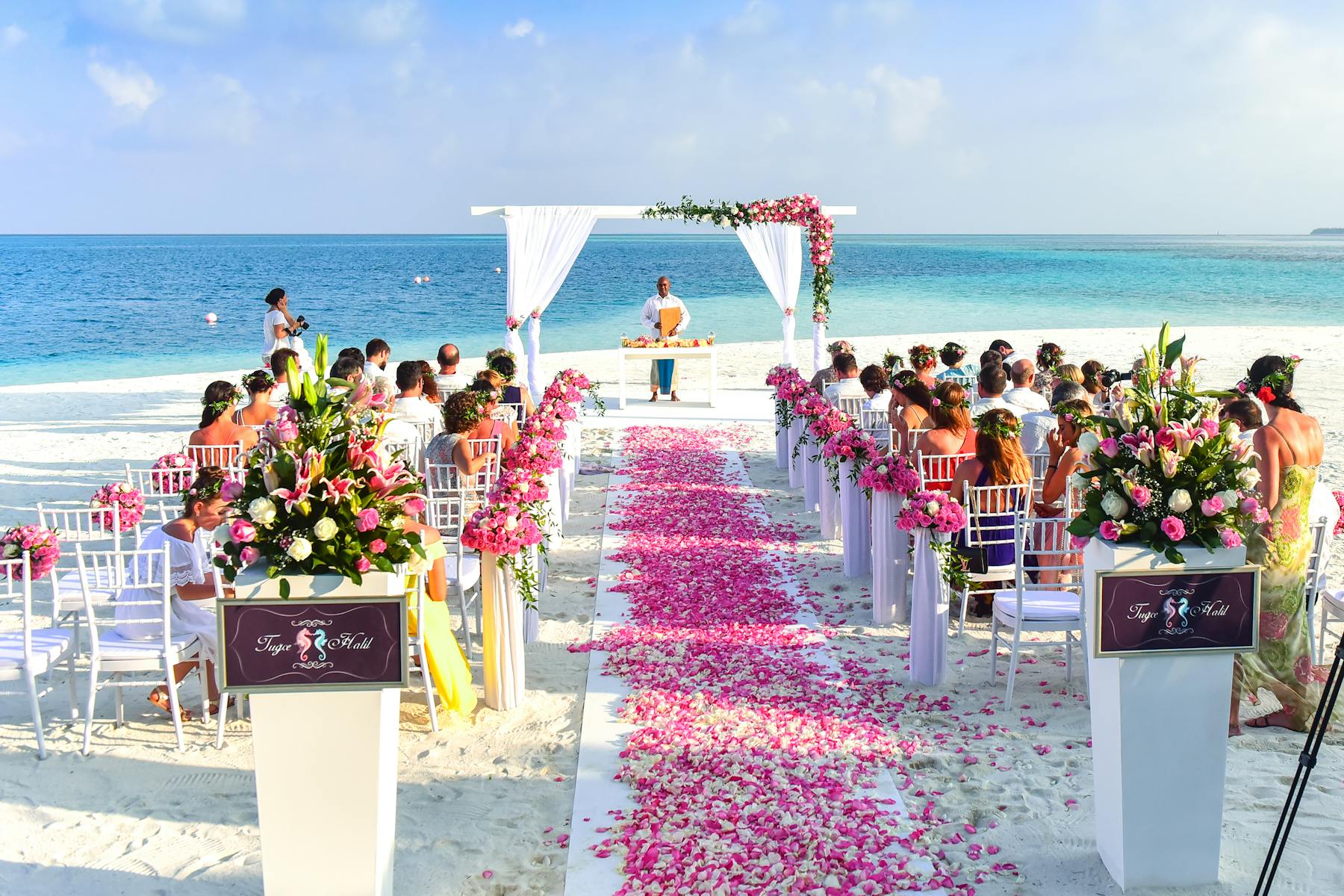
Beach wedding ceremony with floral arch and pink petal aisle by the ocean

Glossary

This reference list clarifies industry-specific terminology so you can communicate effectively with vendors and ensure your music choices comply with local regulations.

  • BPM: Beats per minute; a simple measure of musical speed.
  • Processional: Music played as the wedding party and partners walked down the aisle.
  • Recessional: The celebratory exit song at the end of the ceremony.
  • Prelude: Light background music as guests arrive and are seated.
  • Postlude: Music as guests exit after the ceremony.
  • First Dance: The couple’s featured dance at the start of the reception.
  • PRO (Performing Rights Organization): A group that licenses public performances of music to venues and distributes royalties to songwriters and publishers.
  • Noise Ordinance: A local rule that limits volume or music hours in public or residential areas.

FAQ

Q: How many ceremony songs do we need?
A: Plan 20-30 minutes of prelude, one processional for the wedding party, one for the entrance, an optional unity/vow track, and one recessional.

Q: Can we just use Spotify or Apple Music at the beach?
A: For weddings, consumer streaming apps may be unreliable and restricted. Spotify is personal and non-commercial only. Apple content is for personal use. If DIY, use offline files and confirm venue/permit local requirements.

Q: Acoustic or recorded music for the aisle?
A: Acoustic feels intimate and flexible, whereas recorded music offers control and familiar versions. Either works if you test at the location and set levels.

Q: Do we need a music license for our wedding?
A: In many U.S. cases, the venue or DJ covers public performance licensing, so confirm this in writing. Ceremonies inside a house of worship may fall under a religious‑service exemption, but receptions usually do not.

Q: How do we fight wind and waves on the mic?
A: Use lapel mics with foam windscreens, enable high‑pass filters, point speakers toward guests, and keep volume moderate to avoid harshness.

Final Thoughts

Beach weddings shine when music feels effortless. The easiest way to get that ‘effortless’ feeling is to book entertainment that can run the full flow (ceremony, cocktails, formal moments, and dancing) with solid outdoor audio planning.

If you’re ready to lock it in, send your date, location, estimated budget, and guest count through our contact form (or call our office), and we’ll recommend the best available bands and DJs for your much-awaited beach wedding.

Best Beach Wedding Songs: Top Picks for Real Weddings2026-03-19T08:21:00-06:00

How Weather Affects Live Wedding Bands and Their Performance

How Weather Affects Live Wedding Bands and Their Performance

Weather shapes everything about a live band’s performance, from how the music sounds to whether the show can go on at all. A light breeze can carry vocals, while a sudden downpour can threaten instruments and power. Planning for weather is not just a comfort issue; it is a safety and reliability issue.

When booking a live band for a wedding, a smart weather plan protects your guests, your band’s gear, and the event’s timeline. The good news: a few choices made weeks before the date can prevent last‑minute scrambles and heart‑stopping cancellations.

Wedding guests dancing at outdoor reception

TL;DR

  • Rain, lightning, and wind trigger safety stops; heat and cold affect players, tuning, and electronics.
  • Use grounded, GFCI‑protected power and keep generators far from people and buildings.
  • Tents help with rain and sun but are not lightning‑safe shelters; solid buildings and vehicles are.
  • Humidity and temperature change tuning and tone, and wind reshapes how sound carries.
  • Put a written Plan B in the contract and assign one person to watch official weather alerts.

The Big Weather Variables That Change Live Music

Outdoor celebrations bring unpredictable elements, such as extreme heat, high humidity, and sudden gusts of wind, that can jeopardize both performance quality and delicate equipment. These environmental shifts don’t just affect musicians’ comfort; they can physically alter the tuning of instruments and the safety of electronic setups.

Proper planning ensures that the music remains seamless and the dance floor stays packed, regardless of what is happening in the sky. This guide provides actionable strategies to weather-proof your wedding day, from logistical checklists to communication tips with your venue.

Green Light Booking’s elite, professional wedding bands are seasoned experts at adapting to outdoor conditions. With high-end gear and years of experience, our musicians deliver a flawless, high-energy performance regardless of the weather.

Rain and Moisture

Water is the top threat to people and equipment. Wet conditions increase shock risk, which is why outdoor power for backline, lights, and PA should be protected by GFCI (ground‑fault circuit interrupter) devices and rated, outdoor‑use cabling.

Avoid daisy‑chained household power strips. Elevate power connections off the ground, keep them under drip‑proof covers, and route cables through ramps to prevent puddle contact. Authoritative safety rules treat moisture as a key factor in shock hazards and endorse GFCI as a primary protection method.

Moisture also harms instruments. Acoustic guitars and wooden instruments swell in high humidity and dry out in low humidity, which affects action, intonation, and finish. Major manufacturers recommend keeping instruments near the mid‑40s to mid‑50s percent relative humidity; inside a case is best when the weather swings.

Lightning

How weather affects live wedding bands is especially important when it comes to lightning. Lightning changes everything. Build this timing into your run‑of‑show so a pause does not derail the night. If thunder is audible, lightning is close enough to strike.

Industry and public safety guidance is simple: suspend outdoor activities, seek a fully enclosed building or a hard‑topped vehicle, and wait at least 30 minutes after the last thunder before resuming. Open‑sided tents, gazebos, and band shells do not count as lightning‑safe shelters.

Heat and Humidity

Heat drains musicians, overheats amps and wireless gear, and can make audiences unwell. The heat index, a measure that blends air temperature with humidity, helps estimate human heat stress in shade. Direct sun raises the risk further.

To keep your musicians performing at their best in the heat, make sure the stage area is fully shaded and provide plenty of chilled water. If your venue is particularly humid, check if they have a climate-controlled ‘green room’ where the band can store sensitive wooden instruments, like violins or acoustic guitars, until they need to perform.

When forecasts point to risky heat, adjust the schedule, add shade and fans, stock cold water, lighten wardrobe, and shorten sets. Humidity swings also detune stringed and wooden instruments. Keep a small digital hygrometer in the green room or cases, and use in‑case humidifiers or desiccants to keep instruments within their recommended band.

Cold and Rapid Temperature Swings

Cold stiffens fingers, thickens valve oil, and knocks instruments out of tune. Transitioning from a chilly load‑in to warm stage lights can create condensation on metal gear and inside cases.

In colder months, remember that stiff fingers can’t play complex solos. If you’re hosting an outdoor autumn ceremony, consider placing patio heaters near the performance area. This ensures the musicians can maintain the dexterity needed to provide that perfect processional music.

Wind

Wind does two things at once: it adds stage noise, and it bends how sound travels. Downwind of the stage, sound tends to bend toward the ground and carry farther. Upwind, it bends upward and can seem to fade.

Strong gusts also threaten temporary roofs, backdrops, and light stands. Use proper ballast per the structure provider, install wind screens on microphones, and lower tall speaker poles as conditions worsen. Be ready to strike soft goods if a gust front approaches.

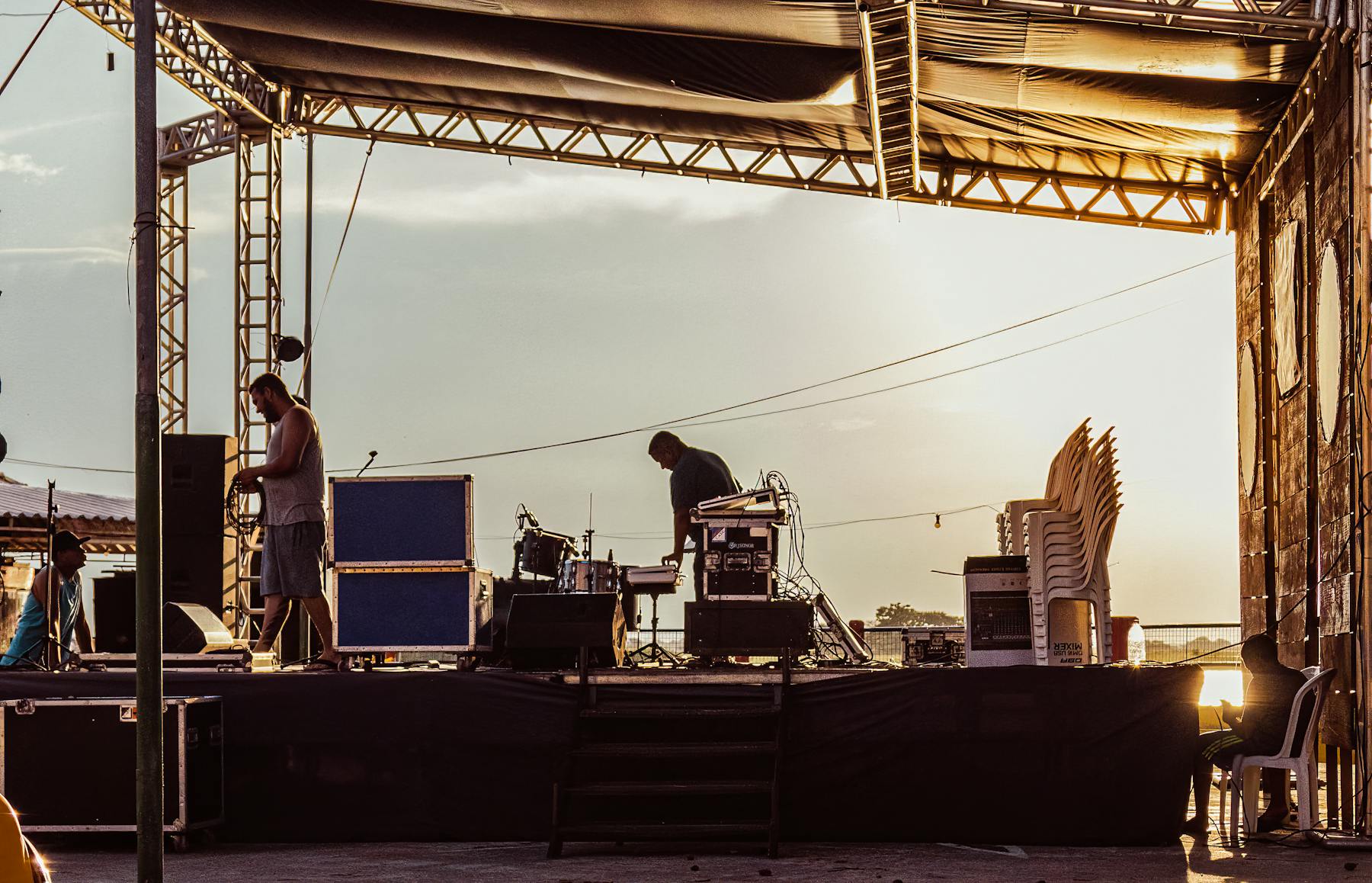
Live band setting up outdoor wedding stage

Comparing Indoors, Tented, or Open‑Air Setups: What Fits Your Day

Learn the specific trade-offs between indoor and outdoor wedding settings to select the right environment by comparing how each option impacts safety requirements, power distribution, and overall sound quality.

Option Weather Shield Sound Quality Safety & Power Logistics
Indoors Best against rain, wind, heat, and lightning Predictable acoustics; easier to tune PA Permanent power; climate control Faster setup; permits are rarely an issue
Tented Outdoors Good rain and sun cover; not lightning‑safe More reflective than open air; watch low‑frequency buildup Requires GFCI, cable management, and professional anchoring Site access, ballast, and layout matter
Open‑Air Outdoors Most exposure to rain, wind, heat, and lightning Natural, airy sound; wind and temperature affect the carry Requires a robust weather plan and safe power distribution Scenic, but the highest weather risk

Contracts, Permits, and Curfews

Spell out a weather backup in the performance agreement. Include who decides to pause or move, how long the delay window lasts, what counts as cancellation, and whether an indoor hold exists. At Green Light Booking, we ensure all weather-related contingencies are clearly defined, so you’re protected in case of unforeseen weather events.

Note local noise rules and venue curfews. Many towns set outdoor sound limits or firm end times. If you expect to use a generator, confirm fuel storage, placement, and quiet hours with the venue.

Gear and Logistics That Weather‑Proof Your Band

Familiarizing yourself with specialized gear ensures that technical requirements are met to protect both the musicians and your guests.

  • Power and protection: Confirm your venue or rental company provides GFCI-protected circuits for outdoor areas to prevent electrical hazards. Ask if they have cord ramps or covers to keep connections dry and elevated above potential puddles.
  • Power generation: If a generator is required, make sure that it’s placed far from guest areas and buildings to keep noise and deadly carbon monoxide exhaust away from your celebration.
  • Staging and covers: Prioritize professionally installed tents with proper weights (ballast) rather than simple pop-ups, which are intended for shade but can be dangerous in high winds. Ensure the stage plan allows for lowering backdrops or securing stands if gusts arrive.
  • Instruments and monitoring: While musicians handle their own gear, you can help by providing a climate-controlled space (like a green room) for them to store sensitive wooden instruments before the performance. This protects them from the humidity and temperature swings that cause tuning issues. Check if your band has in‑ear monitors to help reduce wind noise and control stage volume when gusts hit.
  • Crew roles and comms: Assign a weather lead to monitor official alerts and radar and to call holds. Share a simple code on radios and with the MC for quick, calm announcements.

Sound and Acoustics in the Elements

Outdoors, the air itself becomes part of the acoustic system. Temperature and wind gradients refract sound, making them among the common pitfalls in outdoor weddings. Downwind conditions and nighttime temperature inversions can push sound toward the ground, so it carries farther. Meanwhile, hot, sunny afternoons tend to bend sound upward, so the audience upwind may hear less.

When choosing your ceremony or reception layout, be mindful of the wind. If your ‘Plan A’ involves a cliffside view, high winds can carry the sound away from your guests. Talk to your band about their ‘sound reinforcement’ plan. They may need to bring additional speakers (fills) to ensure your vows and music are heard clearly by the back row.

If wind picks up, angle arrays slightly downward, add front fills near the stage, and recheck coverage upwind to ensure clarity. Our live wedding bands have experienced sound engineers who will adjust the setup to accommodate these factors and maintain optimal sound quality.

Remember that higher humidity generally softens the loss of very high frequencies over distance, while dry air can dull highs faster. Small EQ trims, a gentle high‑frequency shelf, and checking the far‑field mix during soundcheck help keep clarity consistent as the weather shifts.

Examples

These examples demonstrate that with the right adjustments to set times and equipment, a wedding schedule can stay on track even when the weather doesn’t cooperate.

Summer Vineyard Reception

A four‑piece band played on a small open deck with afternoon highs near 94 degrees Fahrenheit and sticky humidity. The planner moved the first set earlier, added large fans behind the band, and stocked chilled water on both sides of the stage.

The couple worked with the planner to move the first set earlier to avoid the peak afternoon sun. They also ensured large fans were positioned behind the band. Because the couple prioritized the band’s cooling, the musicians were able to maintain a high-energy performance without overheating. Guests stayed comfortable, the mix stayed clear, and no one overheated.

Mountain Lodge Lawn, Afternoon Thunderstorms

Forecast showers built into a thunderstorm warning. The contract already named the venue manager as the weather lead. At the first rumble, the manager called a hold. The band muted and powered down, the crew covered pedalboards and racks, and everyone moved into the lodge.

Lightning continued, so the reception pivoted to the lodge ballroom, a backup room reserved in advance. After 35 minutes with no thunder, the band resumed inside on a small PA. The night stayed on schedule, and the couple got a full dance set.

Actionable Steps / Checklist

Following these steps ensures the transition between weather scenarios is seamless and safe.

  • Pick your A plan and B plan now; prepare an indoor backup or tented option reserved.
  • Assign one weather lead with authority to pause or move the show.
  • Use GFCI‑protected outdoor power and keep all connections off the ground and dry.
  • Place any generator outside, well away from buildings and people, with exhaust pointed away from openings.
  • Stock wind screens, tarps, towels, spare strings/reeds, and a hygrometer with in‑case humidifiers or desiccants.
  • Set thresholds in writing; pause on the first thunder; resume 30 minutes after the last thunder.
  • Map cable runs, ballast, and safe egress before load‑in; protect cables with ramps.
  • Recheck the mix upwind and downwind as temperatures fall after sunset.
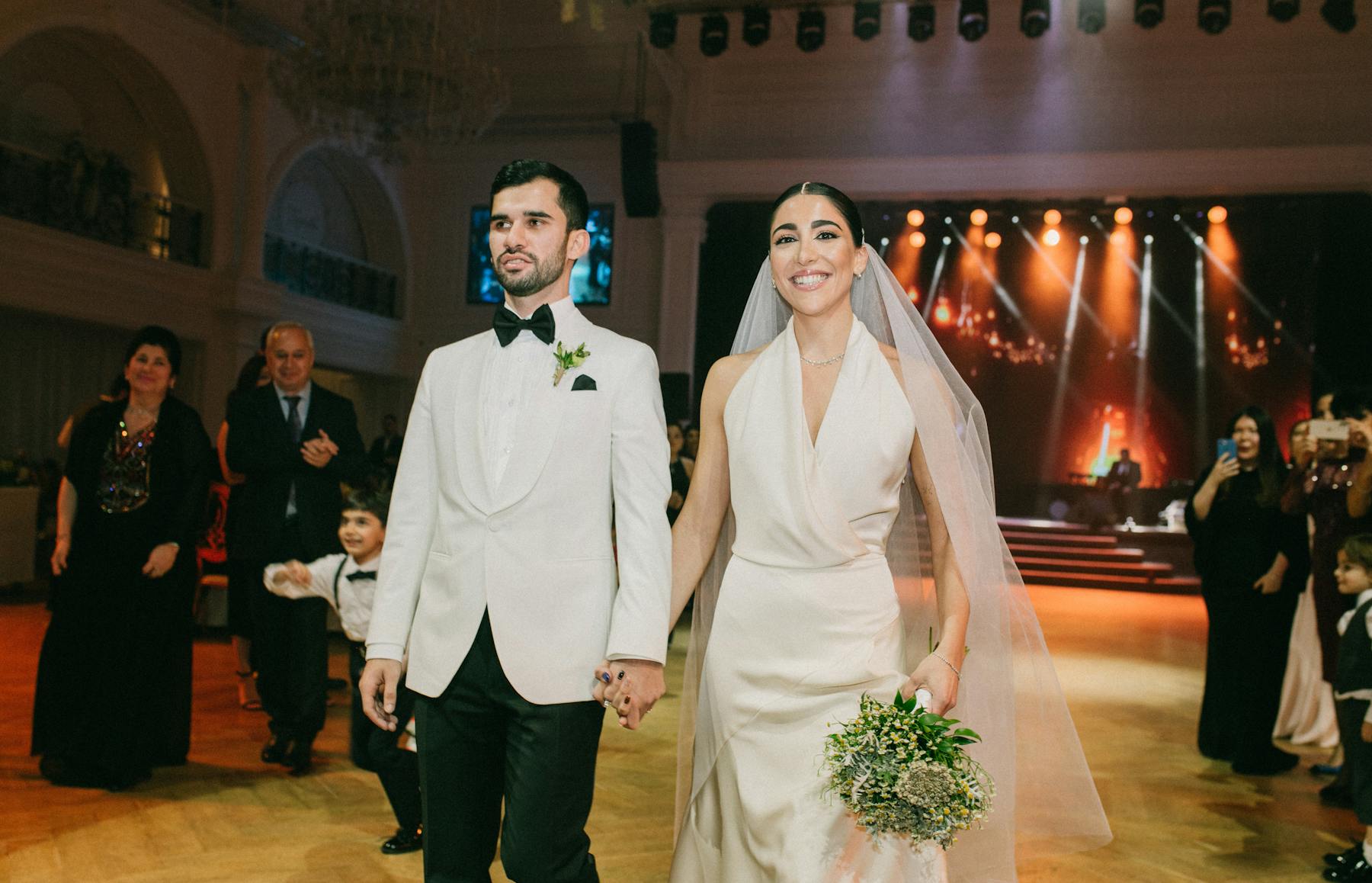
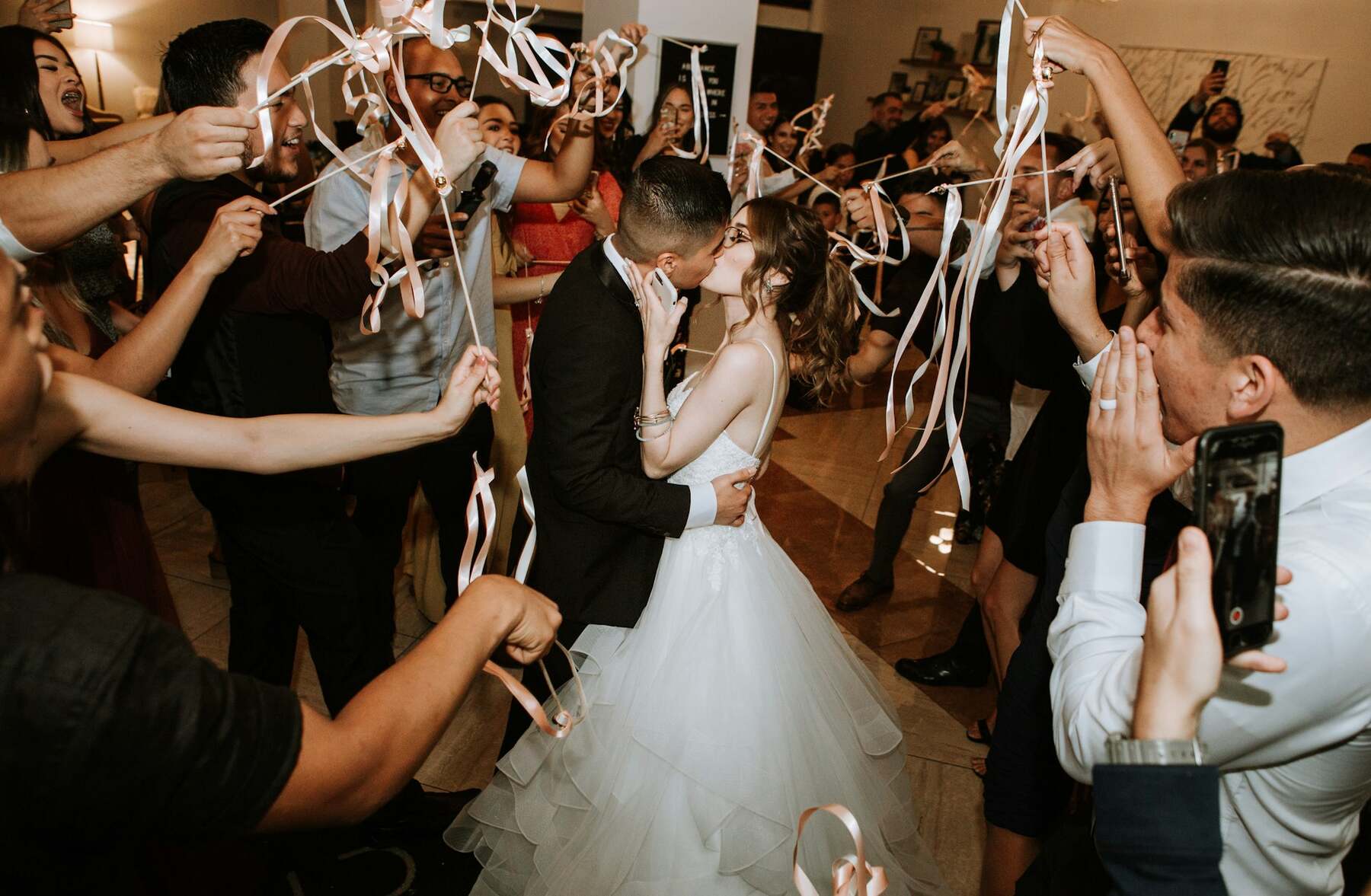
Bride and groom entering wedding reception

Glossary

This foundational knowledge ensures everyone is on the same page regarding safety protocols and the specialized equipment needed to maintain a high-quality performance.

  • GFCI: A fast‑acting device that cuts power when it detects a small difference in current flow, reducing shock risk.
  • Heat Index: A measure that combines air temperature and humidity to estimate how hot it feels in the shade.
  • Temperature Inversion: A layer where air aloft is warmer than air near the ground; it can bend sound toward the surface.
  • Ballast: Weights used to secure tents and stage roofs so wind cannot lift or shift them.
  • Backline: The band’s core instruments and amps are placed on stage behind the front line of performers.
  • In‑Ear Monitors: Earbuds with a personal mix that replace or supplement wedge speakers on stage.
  • Run‑Of‑Show: The event timeline that lists who does what and when.
  • Carbon Monoxide (CO): A colorless, odorless gas from fuel‑burning engines that can be deadly if inhaled.

FAQ

Q: Can a band play through light rain under a tent?

A: Bands can play through light rain under a tent only if power and gear are fully protected from moisture, and there is no lightning risk. A tent may block rain, but it is not a lightning‑safe shelter.

Q: How hot is too hot for a wedding band to perform?

A: When determining how hot is too hot for a wedding band to perform, the answer depends on factors like shade, airflow, workload, and how acclimated the musicians are to the temperature. Use the heat index as a guide, add shade and water, shorten sets, and move indoors if people show signs of heat stress.

Q: What about generators for backyard weddings?

A: Generators for backyard weddings work when sized and grounded properly, but they must run outside and far from doors, windows, and vents. Never use a generator indoors or under a porch.

Q: Why did the mix sound different after sunset?

A: The band’s mix can sound different after sunset because cooling air and changing wind can refract sound toward or away from the audience and slightly change high‑frequency loss. A quick EQ touch‑up after dusk usually fixes it.

Final Thoughts

Weather can derail a perfectly planned performance, but it does not have to stop the show. When coordinating with your band and venue, choose the right setup, wire it safely, define clear pause and resume rules, and stage a few simple backups. Proactive planning transforms a potential weather crisis into a minor footnote, ensuring that the only thing your guests remember is the incredible music and the joy of the day.

Worried about the weather on your big day? Book Green Light Booking’s professional wedding bands, who are fully prepared to adapt to any outdoor condition.

How Weather Affects Live Wedding Bands and Their Performance2026-06-27T12:03:57-06:00

Questions to Ask When Hiring A Band

Questions to Ask When Hiring A Band

Live music can lift any event from nice to unforgettable. The trick is hiring the right band and asking the right questions early, so there are no surprises on the day of the event. This guide gives you clear, practical prompts that cover sound, setlists, contracts, insurance, and logistics.

Whether you are planning a wedding, a corporate party, or a neighborhood festival, the same fundamentals apply. Lock down expectations in writing, align the band, venue, and your team, and leave room for a few what‑ifs. Below you will find concise questions, examples, and a checklist you can use right away.

Close-up of a microphone on stage with colorful lights

TL;DR

  • Confirm availability, pricing, and what is included (sound, lights, MC duties, travel, breaks) before you talk songs.
  • Get a written agreement that names the exact date, times, lineup, payment schedule, cancellation terms, and a simple rider with technical needs.
  • Ask who provides sound and who is responsible for music licensing, volume limits, and local rules at your venue.
  • Request proof of insurance (COI), align load‑in, setup, and power needs, and name a day‑of contact on both sides.
  • Plan backups: a sub musician, a speaker fails, rain hits, or the event runs late; agree on contingencies and overtime rates now.

Questions to Ask When Hiring a Band

Finding the right live entertainment can feel challenging, but with the right questions and the support of professionals like Green Light Booking, you can make an informed decision with confidence. Many planners also struggle with “hidden” logistical hurdles, such as power requirements, equipment load-in times, and specific venue noise ordinances that can disrupt an event.

Knowing the right questions to ask transforms you from a passive booker into an informed advocate for your event’s success. It ensures that you select a group that not only sounds great but also understands the professional etiquette required to keep your timeline on track and your guests engaged.

This guide provides a roadmap of essential qualifying questions to ensure every technical and musical detail is covered before you sign a contract. Our roster of bands prioritizes transparent communication, delivering high-caliber performances tailored to these exact standards.

Start With Fit, Then Details

Establishing a band’s musical style and energy first ensures that their performance aligns with the specific atmosphere and demographic of your event. Vetting their live capability through unedited clips and references prevents the disappointment of hiring a group that relies on studio production rather than genuine talent.

Decide What Style, Energy, and Lineup Fit Your Event

Good bands tailor their sets to the crowd and room. With our roster, you’ll have access to unedited live videos, recent client references, and sample setlists to ensure the band you hire aligns perfectly with the vibe and energy of your event.

  • What genres do you cover well, and what do you avoid?
  • Can you share recent live videos and two client references?
  • What is the standard lineup, and do you bring subs if someone is sick?

What Exactly Is Included in Your Fee?

Spelling this out avoids last‑minute rentals or upcharges. If the venue already has a system and operator, confirm who coordinates.

  • How many sets and how long does each last? How many breaks?
  • Do you provide PA (sound system), microphones, and basic lights?
  • Will you MC key moments and play recorded music during breaks?
  • What are your travel, lodging, or parking needs, if any?

Make the Contract Work for You

A short, plain‑English agreement is enough for most private events. Include names, date, place, performance hours, price, payment schedule, what is included, and any add‑ons. Add a rider (a brief attachment listing technical and hospitality needs) so everyone comes prepared. Here are the key clauses to confirm:

  • Cancellation and refunds: State deadlines and non‑refundable portions.
  • Force majeure: Say what happens if events beyond control make the show impossible; rules can vary by state, so keep language specific and narrow.
  • Overtime: Define rates in 30‑ or 60‑minute blocks and how you approve extra time.
  • Substitutions: Allow qualified substitutes if a member is ill, but require the same instrumentation and comparable skill.
  • Recording and social media: Clarify if guests can post clips and whether commercial recording needs consent.
  • Independent contractor status: If you are a business hiring musicians directly, align with current federal guidance on who is an employee vs an independent contractor; this can affect wages and overtime obligations.

Who Handles Licensing, Insurance, and Rules?

Understanding the legalities of public performance licenses and insurance protects you and the venue from potential copyright or liability issues.

  • Public performance licensing: In the U.S., the right to perform music publicly belongs to copyright owners. Venues often (but not always) obtain blanket licenses from performing rights organizations (PROs) such as ASCAP, BMI, SESAC, or GMR so bands can perform covers legally. For most private events held at commercial venues, the venue carries this responsibility, but ask the venue to confirm in writing.
  • Insurance: Ask the band for a certificate of insurance (COI) naming your venue as additional insured if required. A COI is simply proof that coverage exists; it’s not the policy itself.
  • Local rules and volume limits: Noise control is largely handled by state and local governments. Confirm your venue’s cutoff times, decibel limits, and loading rules, then pass them to the band.

Technical and Logistics Essentials

Organizing logistical details and technical requirements protects your event timeline and ensures the performers can perform safely and sound their best in your specific space.

  • Load‑in and setup: What time can the band access the room? How long to set up and soundcheck?
  • Stage and power: Minimum stage size, dedicated 20A circuits, cable runs, and where to place speakers.
  • Backline: If the venue supplies drums, amps, or a piano, send a full list and condition notes.
  • Break music: Will the band provide tasteful playlists? Any must‑play or do‑not‑play requests?
  • Meals and green room: Confirm vendor meals, water, and a secure space for cases and personal items.
  • Parking and passes: Reserve spots close to loading doors to protect timelines and gear.
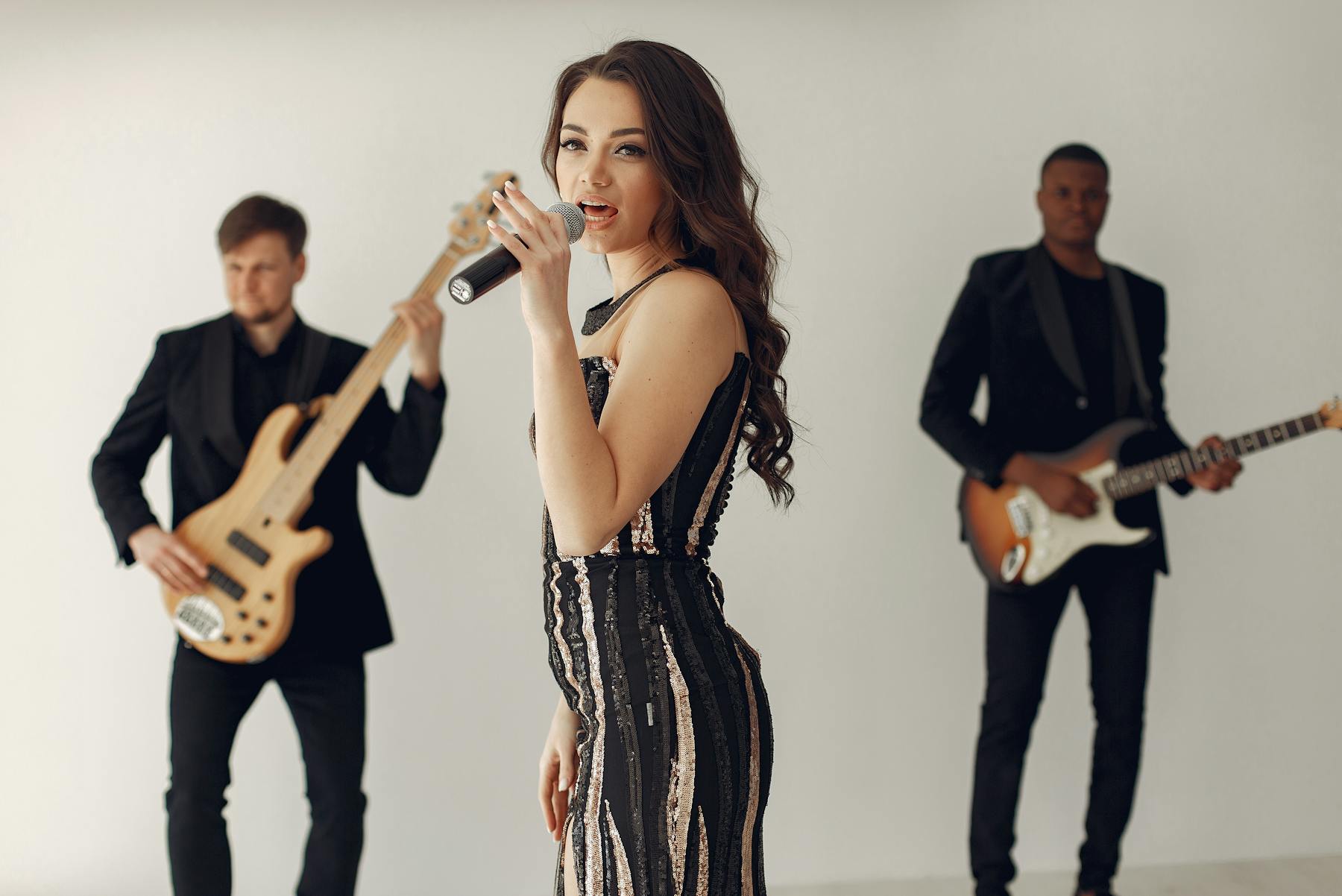
Female singer performing with two guitarists in the background

Who Does What: Client, Venue, or Band?

Defining clear roles for contracts, insurance, and technical needs prevents essential tasks from falling through the cracks between the three parties. This clarity ensures that everyone, from the client to the venue staff, knows exactly who is responsible for everything from volume compliance to providing the sound system.

Topic Typically Client Typically Venue Typically Band
Contract and payment Book, pay deposits and balance, approve overtime Sometimes processes payments if booked through the venue Sign the agreement, invoice, and deliver the service
Public performance license Usually not required at licensed commercial venues; confirm responsibility for non-traditional or private locations Usually holds PRO licenses for live/recorded music Complies with venue rules; provides setlist info if asked
Insurance May need event liability policy Requires COI from vendors Carries liability insurance; provides COI on request
Sound and lights Approves budget; aligns schedule May provide house PA/engineer Provides PA/lights if not in house; runs soundcheck
Noise/curfew rules Aligns expectations with hosts Enforces local limits and cutoff times Adapt the set and volume to comply

Responsibilities can shift by contract; when in doubt, put it in writing.

Deeper Questions to Ask Bands

Going beyond the surface allows you to gauge a band’s professional standards, such as their ability to read a crowd or their plan for technical failures. Asking these deeper questions regarding contingencies and business basics ensures you are hiring a resilient partner capable of handling unexpected shifts on your event day.

Music and Crowd Flow

Asking these questions ensures the band has the professional intuition to maintain event momentum and personalize the performance to your specific tastes.

  • How do you read a room and adjust genres on the fly?
  • Will you learn special songs? How many, and by when?
  • How do you handle “must-play” and “do-not-play” lists to ensure the vibe remains consistent?
  • Do you provide tasteful, curated playlists for when the band is on a scheduled break?

Professional Standards

These questions establish a high level of operational accountability, ensuring that technical needs and day-of communications are handled with precision.

  • Do you send a technical rider and stage plot?
  • Who is the day‑of leader, and how do we reach you during load‑in?
  • Can you provide a certificate of insurance (COI) that names our venue as an additional insured?
  • Will the band conduct a full soundcheck to set levels and fix audio issues before any guests arrive?

Contingencies

Confirming backup plans protects your event from being derailed by unforeseen circumstances like illness, equipment failure, or inclement weather.

Business Basics

Clarifying financial and logistical terms upfront prevents budget overages and ensures a transparent, professional transaction.

  • What are your payment terms and accepted methods?
  • Do you charge sales tax where applicable?
  • Are travel and lodging included or billed at cost?
  • What is your preset rate for overtime if the event runs long and we want the music to continue?

Examples

These examples provide a blueprint for how clear communication and a well-prepared rider result in a packed dance floor and a satisfied venue.

Wedding Band in a Historic Ballroom

A 7‑piece soul band confirmed three 45‑minute sets, two 15‑minute breaks, and provided MC services for toasts. The venue had a licensed sound system but a strict 10:00 p.m. cutoff and load‑in via a single small elevator. The band submitted a one‑page rider with a stage plot, two 20A circuits, and an input list.

Client and venue aligned on a 2:00 p.m. load‑in, vendor meals, and a COI. When speeches ran long, the couple approved a 30‑minute overtime block at a preset rate, keeping the dance floor packed while staying under the curfew.

Corporate Party With Noise Limits

A tech company booked a pop cover band for a rooftop event. The contract noted the city’s noise limits and a 9:00 p.m. cutoff for amplified sound. The band brought compact line‑array speakers and in‑ear monitors to reduce stage volume. They sent a break‑music playlist that matched the brand vibe and listed two learned songs for a product reveal.

Wind picked up during soundcheck, so the leader moved the setup 15 feet to shield microphones. The show ended on time, and the venue complimented the group for clear communication and compliance.

Actionable Steps / Checklist

Following these concrete steps helps you manage deadlines and backup plans effectively, leading to a stress-free performance and a secure booking.

  • Shortlist 3 bands with live videos and recent references.
  • Confirm date, location, hours, lineup, and what is included in one email.
  • Ask for a quote that lists sets, breaks, PA/lights, travel, and any extras.
  • Request a simple contract plus a rider with stage plot, power, and load‑in details.
  • Verify venue responsibilities, including PRO music license, noise rules, house PA, and access times.
  • Collect a certificate of insurance from the band; share venue COI requirements.
  • Finalize a must‑play and do‑not‑play list; note any special songs and deadlines.
  • Swap day‑of contacts, load‑in maps, parking, and elevator or dock info.
  • Set backup plans for weather, subs, and overtime; pre‑approve rates in writing.
  • Pay deposits on schedule; calendar final payment and tip policy.
Musician playing an electric guitar in front of amplifiers

Glossary

Familiarizing yourself with industry terms empowers you to communicate effectively with vendors and understand the fine print of your contract.

  • Rider: A short document attached to the contract that lists an artist’s technical and hospitality needs for the show.
  • Backline: Large instruments and amps provided on-site, such as drums, a bass amp, or a piano.
  • COI (Certificate of Insurance): Proof from an insurer that coverage exists for a policy during specific dates; not the policy itself.
  • PRO (Performing Rights Organization): A group that licenses public performances of songs and pays songwriters and publishers.
  • Public Performance: Playing or transmitting music in a place open to the public or to many people beyond family and friends.
  • Force Majeure: A contract clause that excuses performance when extraordinary events beyond control prevent it. Note that modern force majeure clauses often define specific excluded events (such as pandemics or government shutdowns), so review the language carefully rather than assuming broad coverage.
  • Stage Plot: A simple diagram showing where each musician and piece of gear sits on stage.
  • Soundcheck: A pre‑show test to set levels and fix issues before guests arrive.

FAQ

Q: Can a band play cover songs at my event?

A: Many bands can play cover songs at any event. For most commercial venues, the venue’s PRO licenses cover live and recorded music. Confirm the venue’s policy in writing.

Q: Do I need to buy insurance for a private event?

A: Many venues require clients to carry event liability insurance and ask each vendor for a COI. Ask your venue what they require and when they need it.

Q: How long does a typical band play?

A: Many groups offer 2 to 3 hours of live music split into sets with short breaks. Longer performances usually involve higher fees or overtime.

Q: What if the event runs late?

A: Pre‑agree on overtime in your contract, including rates, how you approve extra time, and any curfew limits.

Q: Who brings the sound system?

A: Some venues have a house system and an engineer. If not, confirm that the band provides PA, microphones, and basic lights, and coordinate load‑in and power.

Final Thoughts

Hiring a band should feel exciting, not stressful. Lead with fit and chemistry, put the essentials in writing, and line up the practical stuff early. When the music starts, you will be free to enjoy the night while the pros do what they do best.

Let Green Light Booking take the guesswork out of your event’s live music. Reach out for a consultation and see how we can help you create an exceptional experience.

Questions to Ask When Hiring A Band2026-09-17T10:53:54-06:00

Wedding Reception Entrance Songs: How to Pick the Perfect Grand Entrance Track

The Perfect Wedding Reception Entrance Songs

Your walk into the reception sets the tone for the whole night. The right entrance song makes guests smile, grabs attention, and builds energy for dinner and dancing. It is a small choice with an outsized impact.

This guide shows you how to choose a song that fits your style, your venue, and your timeline. You will learn what makes an entrance track work, how to avoid awkward fades, and how to handle basics like clean edits and simple licensing realities in the United States.

After choosing the best reception entrance song, let us connect you with the top wedding reception bands to make your entrance unforgettable with the perfect song and flawless timing.

Bride and groom kissing on the dance floor surrounded by cheering guests with streamers

TL;DR

  • Pick a song that matches your vibe and the room’s energy, then cut it to the best 30-45 seconds.
  • When you book through Green Light Booking, our expert DJs and live bands coordinate seamlessly with your event team to ensure your doors open and names are announced at the perfect moment, with the song’s hook hitting just right.
  • Use clean versions, mind intros and outros, and test the volume in your space.
  • In the U.S., public performance rights generally apply; most venues carry blanket licenses, so confirm this in your contract.

What Makes a Great Entrance Song

A great entrance track is immediate. It should hit a recognizable hook within the first 5-15 seconds so guests know it and react. If your favorite song has a long intro, ask your DJ to jump to the chorus or create a custom edit.

Match energy to your plan. If you are entering with the entire wedding party, go with a hype chorus that carries applause. If you want a tender couple-only moment, pick a mid-tempo love song and let your emcee speak less. Keep it short. About 30 to 45 seconds is the sweet spot before you shift to dinner music or speeches.

Key Ingredients to Nail

These ingredients serve as the core creative and practical guidelines for choosing and executing your perfect entrance song.

  • Energy curve: Start strong, peak at the announcement, end clean.
  • Timing: Rehearse the walk from doors to dance floor and time the hook.
  • Personality: Your song should sound like you. Inside jokes and cultural favorites are fair game.
  • Practicality: Use a clean version. If you need help creating a custom edit, Green Light Booking’s experienced DJs and live bands are here to assist with crafting the perfect version of your song.

Popular Entrance Song Ideas by Vibe

Below are starter ideas. Treat them as prompts, not prescriptions. Always pick the clean versions when lyrics are spicy.

Hype and Party-Ready

For a high-energy entrance, consider “Crazy In Love” by Beyoncé featuring Jay-Z, “Industry Baby” by Lil Nas X & Jack Harlow, “Levitating” by Dua Lipa, or “I Gotta Feeling” by Black Eyed Peas.

To bring these hits to life, consider booking Red Hot Revolution for their energetic performance or Rhinestone Rodeo for a fun, lively atmosphere that will get the crowd moving.

Feel-Good Pop

If you’re aiming for a feel-good vibe, “Can’t Stop the Feeling!” by Justin Timberlake, “Higher Love” by Kygo & Whitney Houston, “Best Day of My Life” by American Authors, and “Walking on Sunshine” by Katrina & The Waves are all excellent choices.

For an uplifting feel, Modern Retrospect will bring the energy, or Music City Groove will create the perfect positive vibe with their catchy tunes.

Romantic and Modern

For a romantic, modern feel, you might choose “Lover (First Dance Studio Cut)” by Taylor Swift, “All of Me (Instrumental Edit)” by John Legend, “Marry You” by Bruno Mars, or “A Thousand Years” by Christina Perri.

Metro Music Club offers intimate, heartfelt performances perfect for these songs, while guitarist Austin Weyand can provide beautiful acoustic renditions for a more personalized touch.

Classic and Timeless

If you prefer something classic and timeless, “Signed, Sealed, Delivered I’m Yours” by Stevie Wonder, “This Will Be (An Everlasting Love)” by Natalie Cole, “September” by Earth, Wind & Fire, and “You Make My Dreams” by Hall & Oates will never fail to impress.

Liquid Blue brings iconic classics to life with their high-energy performances, and SHUFFLE offers a perfect blend of timeless tunes and soulful energy.

Fun and Playful

For a fun and playful entrance, “Shut Up and Dance” by WALK THE MOON, “Good as Hell” by Lizzo, “Sugar” by Maroon 5, and “HandClap” by Fitz and The Tantrums are all lively options to consider.

Party Echelon will keep the fun going with their upbeat vibes, while Playback offers a mix of lively, upbeat tracks to create a playful atmosphere.

Compare Entrance Vibes at a Glance

This comparison table quickly guides you to the perfect song style and proactively avoids common issues like awkward silence or choosing a song with a too-long intro.

Vibe Typical BPM (beats per minute) Sample Hook Point Best For Watch-Outs
Hype/Party 110-130 First chorus hit Big wedding party intros Keep lyrics clean; avoid too-long intros
Feel-Good Pop 100-120 Pre-chorus into chorus Couple entrance + crowd singalong Not all choruses project over applause
Romantic 70-95 First verse or chorus Couple-only entrance Energy dip if speeches start immediately
Classic 100-125 Instantly recognizable riff All-ages crowd pleasers Older masters vary in volume; gain-match edit

Plan for Each Entrance Moment

This section helps you customize the music and timing for each group entering the reception, from your parents to the couple, ensuring a distinct and appropriate mood for every announcement.

Parents and VIPs

Short, elegant clips work best. Consider instrumental cues or upbeat classics. Ask your DJ to line up 10-15 seconds per pair and crossfade smoothly into the next cue.

Wedding Party

Pick one track for the whole crew or two alternating clips for variety. If the party plans bits or quick dances, use a bold, countable beat so they land on time.

Couple Entrance

This is your headline moment. Choose either:

  • A punchy hook the emcee can talk over while hyping your names
  • A chorus drop where mics go quiet and the room hears the hook clean.

Decide whether you go straight into a brief first dance or pivot to dinner. If you want a first dance immediately, have the DJ ready to segue to song two within seconds.

DJ controller and laptop set up under a decorated event tent with guests in the background

Logistics That Make or Break the Moment

Understanding these logistics ensures a technically flawless and powerful entrance moment by focusing on critical details often overlooked by non-DJs.

Clean Edit

Use a radio edit or ask your DJ for a custom cut. A clean version means explicit words are removed.

Cue Points

Share a time stamp for where to start and where to end. For example, start at 0:26 on the snare; cut at 1:01 right after the chorus tag.

Intros and Outros

Many hits start with 8-16 bars of intro. Trim the intro or pre-cue the drop so your first step into the room aligns with the beat.

Mic and Music Balance

During announcements, lower the music to about 20-30% percent so names land clearly, then swell the volume for applause. Our DJs and live bands are experts in balancing mic levels and music volume, ensuring your entrance is clear, and your names are announced with precision.

Lighting and Doors

Coordinate with your coordinator or venue to dim lights, open doors, and aim spots right as the hook hits.

Noise Limits

Many venues have sound caps. Do a quick sound check to make sure the chorus still pops at the permitted volume.

Licensing Basics

Playing music for guests is a public performance under copyright law when it happens at a place open to the public or in front of a substantial group beyond family and close friends. Most U.S. venues that host events maintain blanket licenses with performing rights organizations (PROs) such as ASCAP, BMI, and SESAC, which typically cover wedding receptions on their premises.

There are statutory exemptions for certain nonprofit, noncommercial performances, but they are narrow and often do not apply when performers are paid. The practical move is simple: confirm in writing that your venue or caterer holds the necessary public performance licenses.

Don’t worry about licensing. When you book through Green Light Booking, we ensure that your event is fully covered with all necessary public performance licenses, so you can focus on enjoying your special day.

Examples

These example scenarios illustrate how different music styles and timing strategies translate into successful entrance vibes, offering tangible inspiration for your own reception.

Elegant Ballroom, Classic Motown Hook

The couple wanted a joyful but timeless entrance. The planner timed doors to open 6 seconds before the chorus of Signed, Sealed, Delivered I’m Yours. The band started at the pre-chorus, kept music under the emcee while names were read, then lifted the fader for the hook as the couple reached the floor.

Total runtime was 38 seconds. Applause carried naturally into dinner welcome remarks with no awkward fade.

High-Energy Loft, Wedding Party Skit

A city loft reception used two alternating songs: Levitating for playful pairs and Industry Baby for the groomsmen’s quick dance bit. The band set cue points to the first chorus in both songs and used 2-beat cuts between clips to keep momentum.

The couple entered on a hard drop, did a 15-second spin, and the band snap-mixed into a mellow dinner track. The contrast kept the entrance electric without overwhelming the start of dinner.

Actionable Steps / Checklist

This checklist provides a sequential, practical guide to take you from a general idea to a perfectly executed entrance, ensuring no critical step is missed in the planning process.

  • Pick your vibe first; then shortlist 3 songs that fit your venue and crowd.
  • Listen for the hook and mark the exact start and end points.
  • Request or create a clean 30-45 second edit with a crisp ending.
  • Share time stamps, version names, and backup tracks with your DJ or band.
  • Decide who gets announced and in what order; write it down for the emcee.
  • Walk the route and time it; adjust your cue point if needed.
  • Confirm the venue’s sound limit and that a PRO license is in place.
  • Align lighting and doors to the musical drop.
  • Load your entrance tracks onto at least two devices or sources.
  • Do a quick rehearsal with mics, music levels, and doors before guests arrive.
Newly married couple walking down the aisle as guests toss confetti indoors

Glossary

This list defines the technical terms used by DJs and planners, allowing you to communicate clearly and effectively with your vendors about your song choices and timing preferences.

  • BPM: Beats per minute; the speed of a song. Higher BPM usually feels more energetic.
  • Clean Edit: A version with explicit language removed or masked.
  • Cue Point: The exact time stamp where the DJ or band starts or stops the song.
  • Hook: The catchiest, most recognizable part of a song, often the chorus.
  • Mashup: A mix that blends parts of two or more songs into one performance.
  • Public Performance: Playing music for a group beyond family and close friends or at a place open to the public; triggers licensing obligations in many settings.
  • PRO: Performing rights organization that licenses public performances and distributes royalties to songwriters and publishers.
  • Segue: A smooth transition from one song to the next without silence.

FAQ

Q: How long should our entrance song be?

A: For an entrance song, aim for 30-45 seconds. It keeps energy high and avoids clunky fades.

Q: Can we use different songs for parents, the reception party, and the couple?

A: You can use different songs for the parents, the entourage party, and the couple. Plan 10-15 seconds per pairing and one punchy clip for the couple.

Q: Do we need permission to play our song at the reception?

A: In the U.S., public performance rights generally apply. Most event venues hold blanket licenses from PROs that cover receptions, so confirm this in your venue contract.

Q: What if our favorite song has a slow intro?

A: If your favorite song has a slow intro, start at the first chorus or ask for a custom edit. Your walk should meet the hook quickly.

Q: Should we go straight into our first dance after the entrance?

A: You can go straight into the first dance after the entrance if you want a focused emotional beat. Otherwise, pivot to dinner and save the first dance for later in the flow.

Choose an Entrance Song that Will Create the Perfect Moment

Your entrance song is a tone-setter, and with Green Light Booking, it’s a stress-free experience. Let our expert DJs and live musicians help you choose a track that feels like you and ensure every moment of your entrance is perfectly timed.

Wedding Reception Entrance Songs: How to Pick the Perfect Grand Entrance Track2026-01-23T15:19:40-06:00

How Long Do Wedding Bands Play For?

How Long Do Wedding Bands Play For?

Live music makes a reception feel like a celebration. To plan the flow, you need a clear answer to a simple question: how long do wedding bands play for? The short version is that most bands perform in sets that add up to approximately 2.5 to 4 hours of live music during a typical 4- to 5-hour reception.

Your venue, timeline, and budget all shape what is realistic. Bands also need short breaks to protect their voices and keep the sound tight. With a smart schedule and the right backup music during breaks, guests will feel continuous energy from the first dance to the last song.

The details below will help you pick the right coverage and avoid awkward dead air. We’ll also assist you in getting in touch with the best wedding bands for a tailored music plan.

Guitarist playing on stage with a live band during an indoor event

TL;DR

  • Most wedding bands play 2 to 3 sets totaling about 2.5 to 3.5 hours of live music within a 4 to 5 hour reception. However, you can also request longer sets or even consider a band with a larger lineup for up to 3 continuous hours of live music, depending on your preferences.
  • Common formats are 2 x 60 minutes or 3 x 40-45 minutes, with 15-20 minute breaks.
  • Receptions often last 4-5 hours; expect a 60-minute cocktail hour, 90-120 minutes for dinner and toasts, then dancing.
  • Use breaks for toasts, cake cutting, or DJ/playlist fills so the room never goes quiet.
  • Longer nights add a DJ or after-party; extended live time usually means overtime fees and more logistics.

Typical Wedding Band Play Time

Most wedding dance bands book a block of evening coverage rather than minute-by-minute time. In practice, you get about 3 hours of live performance inside a 4-hour window, split into sets.

Many agencies and bands frame this as 2 x 60-minute sets or 3 x 40-45-minute sets. This format keeps the band fresh and lets you slot speeches or formalities into short intermissions while maintaining momentum.

If you want more than 3 hours of live dance music, ask about adding a third set, moving to a larger lineup that can rotate players for a continuous 3-hour run, or pairing the band with a DJ for a longer evening.

Sets and Breaks: What to Expect

A set is an uninterrupted block of songs; a break is a short rest between sets. Breaks are normal and important for vocal health and consistency. Many bands plan 15-20 minute breaks after each 45-60 minutes of playing, ensuring a balance between maintaining high energy and protecting vocal health.

Whether it’s a party band like Playback or a country band such as Jagertown, our live bands can adjust break lengths based on your event’s needs, from shorter breaks to longer ones to accommodate speeches or cake cutting.

We recommend at least a 15-minute break every 2 hours of playing. Exact break timing is part of your contract and should be aligned with your reception timeline so the dance floor never feels empty.

Ceremony, Cocktail Hour, Dinner, and Dancing

Plan the whole music day, not just the dance sets.

  • Ceremony: 20-60 minutes of coverage for prelude, processional, and recessional.
  • Cocktail hour: Typically 60 minutes of lighter music.
  • Dinner and toasts: 90-120 minutes with background music and planned speaking moments.
  • Dancing: 2-3 hours of higher-energy sets to close the night.

Many couples hire different configurations for each segment, such as a string duo for the ceremony, an acoustic trio for cocktails, and then the full band for dancing. A single band can also handle all segments if the lineup and contract allow it.

Common Packages and What They Actually Cover

Compare the various service models available for wedding music to help you choose a package that best aligns with their reception length and budget. Green Light Booking offers tailored packages that can include anything from a string quartet for the ceremony to a full-scale party band for your reception.

Coverage Approach Typical Live Play Time Breaks Strategy Best For Notes
Reception-Only Band 2.5-3 hours inside a 4-hour block 2-3 breaks of 15-20 minutes Standard 4-5 hour receptions Most common; fills handled by a DJ or curated playlist on the band’s system.
All-Day Band Bundle Segments across ceremony, cocktails, dinner, and dancing Short rest between segments One-vendor simplicity Higher fee due to long on-site time; confirm who plays during transitions.
Band + DJ Hybrid Band 2-3 hours, DJ covers breaks and late night Seamless, no silence Long nights or after-parties Keeps energy up for 5-6 hour evenings without inflating band overtime.
Continuous Music Option Up to 3 hours straight via rotating musicians Micro-rotations instead of full breaks High-energy dance focus Requires a larger lineup; confirm song flow and first-dance timing.

How to Schedule the Music

Open the dance floor after dinner. Plan your first dance and parent dances at the top of the first set to pack the floor early.

Live band performing at an outdoor wedding reception under string lights

Schedule a band break during cake cutting or toasts to avoid lulls. Use a DJ or the band’s playback system to run a preset playlist during breaks. Ask the band to end on a big closer, then hit a recorded last song while they tear down if the venue allows a few more minutes for an exit.

Green Light Booking’s expert bands can help create a seamless flow by adjusting the set times to maximize guest engagement, ensuring everyone is on the floor when the music starts.

Factors That Change Play Time

Anticipate these real-world constraints to plan your timeline realistically and avoid costly surprises or last-minute performance reductions.

  • Venue rules and curfew: Some venues end amplified music at 10:00 or 11:00 PM; check before you book extra sets.
  • Setup and soundcheck: Full bands typically need 60-90 minutes to load in, set up, and soundcheck, and sometimes much longer. Build this into your vendor access times.
  • Space and power: Larger lineups and lighting rigs add setup time and may restrict where the band can play.
  • Cultural traditions: Some celebrations run longer by design; use a hybrid plan, so energy stays high throughout.
  • Noise exposure: Keep stage volume reasonable for staff and guests. Occupational guidance treats 85 dBA over 8 hours as a risk threshold. Louder rooms require shorter exposure. Work with your band’s engineer to balance punch and safety.

Need help navigating venue and setup restrictions? Our booking team can coordinate with the bands to ensure your entertainment runs smoothly within a venue’s rules or wedding traditions.

Cost Versus Coverage

Bands usually price by coverage blocks, not purely by songs or minutes. Your quote reflects on-site time, number of musicians, sound and lighting gear, travel, and any special requests. Overtime hours, early load-in, learning additional songs, or adding ceremony and cocktail coverage can increase the fee.

Contracts also spell out how breaks work and what music plays during them, so read those sections carefully and ask for specifics in writing. This is why we use transparent pricing, offering a clear breakdown of what’s included in each package, ensuring you get the most value for your investment.

Examples

These detailed scenarios illustrate how set lengths and breaks are strategically timed to maintain energy and integrate seamlessly with other reception milestones.

Classic Ballroom Reception

A couple books a 10-piece band for 7:00-11:00 PM. The schedule runs cocktails 6:00-7:00 PM with a venue playlist, dinner 7:00-8:30 PM with low-volume background, then dancing 8:30-11:00 PM. The band plays 3 x 45-minute sets at 8:30, 9:35, and 10:35 PM with 15-20 minute breaks timed for toasts and cake.

The band runs a curated playlist over the PA during breaks, so the floor never goes quiet. Guests hear about 35-40 songs live, plus background tracks during transitions.

Long Night, Band + DJ Hybrid

The reception runs from 6:00 PM to midnight with an after-party until 2:00 AM. The couple hires a 7-piece band for 8:30-11:30 PM and a DJ for 6:00-8:30 PM and 11:30 PM-2:00 AM. The DJ handles cocktail hour and dinner, introduces speeches, and keeps a light groove.

At 8:30 PM, the band launches a 60-minute set with the first dance and parent dances, takes a 15-minute break for cake service, then plays 2 more sets. At 11:30 PM, the DJ takes over for high-energy late-night tracks while the band strikes discreetly. Energy stays high for 6+ hours without band overtime.

Actionable Steps / Checklist

Following these steps helps couples execute a flawless music plan by establishing clear expectations with their band 4-6 weeks out.

  • Decide on your reception length first, then work back into how much live music you want for dinner, cocktails, and dancing.
  • Pick a set format that fits your timeline, such as 2 x 60 minutes or 3 x 45 minutes, and confirm break lengths in the contract.
  • Assign what plays during breaks, whether it’s the band’s playlist, a DJ, or your own curated tracks.
  • Align breaks with toasts, cake cutting, or room resets so guests do not feel a lull.
  • Lock in vendor access for load-in, soundcheck, and power; budget 60-90 minutes for setup.
  • Share a detailed timeline and pronunciation guide with your band at least 4-6 weeks out.
  • Confirm first dance, parent dances, and any must-play or do-not-play songs.
  • Ask about overtime rates, early setup fees, and continuous music options if you might extend.
  • Keep volume appropriate for the space; work with the band’s engineer on levels.
  • Build a backup plan for outdoor setups and rain moves.
Empty outdoor performance setup with guitar, microphones, and chairs under hanging lights

Glossary

This shared understanding prevents contractual misunderstandings and ensures that conversations about set formats and break strategies are clear and productive.

  • Set: A continuous block of live songs, usually 40-75 minutes.
  • Break: A short rest between sets, often 15-20 minutes, used for toasts or cake.
  • PA System: The sound reinforcement gear that amplifies vocals and instruments.
  • Soundcheck: A pre-event test to balance levels and fix technical issues.
  • Backline: Onstage instruments and amps provided by the band or venue.
  • Hybrid Package: A band plus DJ plan that covers breaks and late-night.
  • Curfew: Venue or local rule that limits how late amplified music can run.
  • Overtime: Extra performance time billed beyond the contracted coverage.

FAQ

Q: How many hours does a wedding band usually play?

A: Most reception bands deliver about 3 to 3.5 hours of live music within a 4-hour block, split into sets. Longer nights add a third set or pair with a DJ.

Q: Do bands have to take breaks?

A: Short breaks protect performers and keep quality high. Expect 15-20 minutes between sets, with music handled by a DJ or the band’s playlist so there is no silence.

Q: Can a band play straight through with no breaks?

A: Some larger lineups rotate players to provide up to 3 hours of continuous music, usually at a higher fee. Ask specifically about this option.

Q: How long is a typical wedding reception?

A: Most receptions run 4-5 hours, often with a 60-minute cocktail hour, 90-120 minutes for dinner and toasts, and 2-3 hours of dancing.

Q: How early will the band arrive to set up?

A: Plan for 60-90 minutes for load-in and soundcheck, longer for bigger rigs or tricky access. Some bands may require 3-4 hours or more, depending on the size of the band, and if they’re in charge of setting up lights or other miscellaneous equipment components. Confirm vendor access with your venue.

Final Thoughts

Focus on flow, not just numbers. A well-timed 4-5 hour reception with two or three strong live sets and smart break coverage often feels better than a longer night that sags. Choose the format that matches your crowd, lock the details in your contract, and let pros manage the energy from first dance to finale.

Choose the format that matches your crowd, lock the details in your contract, and let the professional wedding bands at Green Light Booking manage the energy from first dance to finale.

How Long Do Wedding Bands Play For?2026-05-28T11:18:09-06:00

How to Hire a Band for Your Next Event

How to Hire a Band for Your Next Event

Live music can turn a good event into a memorable one. The right band sets the tone, fills awkward gaps, and gives people a shared moment to talk about later. Hiring one is not hard if you follow a clear process.

This guide walks you from idea to encore. You will learn where to find great bands, how to compare options, what to put in the contract, and the essentials around licensing, permits, sound, and day-of flow. From there, you can explore our curated roster of premium performers for the best corporate and party bands in the industry.

Crowd watching a live band perform at an indoor concert venue

TL;DR

  • Define your vibe, budget, audience size, and venue rules before you contact bands.
  • Shortlist bands by live videos, recent reviews, and matching setlists; compare by lineup, backline (their gear), and logistics.
  • Use a written contract that covers schedule, payment, tech needs, insurance, licensing responsibilities, and cancellation terms.
  • Confirm performance rights, noise rules, and any amplified sound permits; do not rely on personal streaming accounts for public playback.
  • Plan load‑in, soundcheck, and a simple timeline so the music supports key moments, not the other way around.

Clarify Your Vision and Budget

Start with the basics: event type, date, guest count, room layout, and the role music should play. Do you want background jazz during cocktails, a high‑energy dance band after dinner, or a feature set in a listening environment? Aim for a lineup that fits the room; a 10‑piece horn band in a small dining room is rarely the best match.

Cost depends on date, duration, number of musicians, travel, and production needs. Weekend evenings, long sets, and bands that bring full sound and lighting command higher fees. Decide early if you want the band to supply PA and lighting or if the venue or a production vendor will handle it.

Event Details That Shape the Band Search

Knowing these crucial event details early on helps you filter your band search effectively by confirming the venue’s limitations and ensuring the band’s needs align with the logistical reality of the space. Our booking team ensures these details are taken care of, providing you with a smooth, well-coordinated performance from start to finish.

  • Volume limits or curfews.
  • Power access and stage space.
  • Load‑in path and parking.
  • Set length and breaks.
  • Special songs and cues for speeches or awards.

Where to Find Great Bands

If a band has live performance videos that you can see, that would be ideal, but next best is watching their promo video. If you’re booking a band from Green Light Booking, they can often offer live performance video clips. Scan reviews that mention reliability, flexibility, and crowd response. Alternatively, you can explore our top-tier corporate and party bands, offering you a curated selection of performers with proven track records.

Booking Direct, Through an Agency, or Through Your Venue: Which is the Best Way?

Below is a fast comparison of the main ways to book, whether it’s contacting a band directly, hiring through an agency, or coordinating with the venue or planner. Pick the path that fits your risk tolerance and timeline.

Booking Channel When It Fits Watch Outs
Direct with the Band You have time to vet, want the best price, and prefer direct communication. You manage paperwork, subs, and contingencies if a member is ill.
Entertainment agency You want curated options, backup bands on call, and contract support. Agency fees; confirm who provides sound, insurance, and who holds deposits.
Venue or planner referral Your venue knows which bands work sonically in the room. Do not assume tech or licensing is included; get it in writing.

What to Ask Before You Book a Band

Asking these specific questions ensures you thoroughly vet the potential band’s reliability, technical capability, and contingency plans before signing a contract.

  • Can we see full‑length live videos and an example setlist for this event type?
  • Who is in the lineup that night, and do you use substitutes?
  • Do you provide PA, monitors, microphones, and basic lighting?
  • What are your power and stage requirements?
  • How many sets and how long are the breaks? Can you provide background playlists during breaks?
  • What are your insurance limits and certificate process?
  • What happens if the event time shifts or runs long?

Understand Contracts, Licenses, and Logistics

Understanding contracts, licenses, and logistics is essential for protecting your event, your guests, and the band from unforeseen legal and operational issues.

Drummer performing on stage under warm concert lighting

Use a Simple Written Agreement

Spell out date, location, arrival, soundcheck, set times, attire, song requests, breaks, hospitality, and who supplies sound and lighting. Include payment schedule, deposit terms, cancellation and postponement, weather plan for outdoor shows, and a force majeure clause.

Require proof of liability insurance if your venue asks for it. Keep signatures and a single point of contact for day‑of decisions.

Performance Rights Licenses

U.S. copyright law requires a license for public performances of songs. A performance is considered public when it is at a place open to the public or where people beyond a normal circle of family and friends gather. Private, family‑only celebrations can be treated differently, but rules and enforcement vary by context.

In many cases, the venue already holds blanket licenses from performing rights organizations (PROs) such as ASCAP, BMI, and SESAC. Confirm in writing whether the venue’s license covers your event. If your event is open to the public or ticketed in a commercial space, assume a PRO license is required and make sure the responsible party is named in your contract.

Also, do not use a personal streaming account like Spotify for public playback. Consumer terms limit use to personal, non‑commercial listening. If you’re working with Green Light Booking, we’ll ensure that all performance rights licenses are clear and in place, taking care of the legal details so you can focus on your guests.

Noise Rules and Permits

Local governments often regulate amplified sound, especially outdoors. Some cities require a sound device or amplified sound permit and may set fees and minimum lead times. Treat this like any other event permit and assign responsibility to the venue, planner, or you as host.

Indoors, be mindful of staff hearing exposure. Occupational Safety and Health Administration (OSHA) expects employers to protect workers when noise averages reach certain thresholds over time. Keep the stage volume reasonable and provide ear protection near speakers.

Business Payments and Tax Forms

If a business or nonprofit pays a band as an independent contractor, the Internal Revenue Service (IRS) generally requires Form W‑9 collection and Form 1099‑NEC reporting for $600 or more in payments during the year.

This is separate from your entertainment contract. Confirm specifics with your accountant.

Plan the Show So It Sounds Great

Think in moments. Map music to guest arrival, transitions, speeches, and the peak dance window. Front‑load familiar songs after dinner to pull people onto the floor, then pace the energy with short breaks.

Tech and Timeline

Share a basic run‑of‑show with the band, AV, and venue: delivery window, load‑in route, set times, break music, speech cues, and hard cutoff. For outdoor events, plan power distribution, weather cover, and a backup plan for rain or wind.

Day‑Of Coordination

Assign one decision‑maker. Keep water and a secure green room if possible. Confirm who announces key moments. Tidy cable runs and a small buffer zone in front of speakers improve safety and photos.

Actionable Steps / Checklist

Following this checklist ensures a systematic and comprehensive process for hiring the right band, taking you from initial goal-setting to the final day-of coordination and payment.

  • Lock your event goals, guest count, venue rules, and budget range.
  • Shortlist 3 to 5 bands with recent live video and matching setlists, or choose from our vetted musicians to select the best fit for your event from our curated roster of top-tier corporate and party bands.
  • Compare offers on lineup, tech included, arrival times, and total price.
  • Select and sign a contract covering schedule, gear, song requests, insurance, licensing duty, and cancellation terms.
  • Confirm any local sound permits, curfews, load‑in logistics, and parking.
  • Align the run‑of‑show, including soundcheck, set times, break music, speeches, and cutoffs.
  • Share contacts and a day‑of comms plan; have payment ready as agreed.
Empty concert stage with drum kit and microphones before a show

Glossary

The glossary provides clarity on industry-specific terms, helping you confidently communicate with agencies and bands about technical and legal aspects.

  • Backline: The band’s core gear on stage, such as amps, drums, and keyboards.
  • PRO License: A public performance license from a performing rights organization that lets venues host live or recorded music legally.
  • Rider: An attachment to the contract listing technical, hospitality, and logistical needs.
  • Soundcheck: A pre‑show test to set levels and fix issues before guests arrive.
  • Setlist: The planned sequence of songs for a performance.
  • Force Majeure: A clause that excuses performance when major events beyond control make it impossible or unsafe.
  • Time‑Weighted Average (TWA): The average sound level over a work shift used in hearing safety rules.
  • 1099‑NEC: An IRS form businesses use to report $600+ paid to non‑employees for services.

FAQ

Q: How far in advance should I book?

A: For peak Saturdays in spring, summer, and fall, popular bands can book several months to even a year or more ahead. If your date is soon, be flexible on style and set times.

Q: Can the band learn our special song?

A: Bands can often learn special songs, as long as there’s enough notice. Our corporate bands, such as Modern Retrospect, Red Hot Revolution, and Rhinestone Rodeo offer flexibility in learning special songs or custom requests. Just let us know, and we’ll work with the band to make it happen.

Q: Who brings the sound system?

A: Some bands bring a full PA and basic lighting. Meanwhile, others expect the venue or a production vendor to supply it. More often than not, venues will charge a lot more to use their equipment, so it usually pays to have the band bring or rent the equipment. Make it explicit in the contract.

Q: Do I need special licenses for a private celebration?

A: Performance licensing depends on whether your event is considered public and on venue coverage. Many private, family‑only events are treated differently, but verify with your venue and list who is responsible in your agreement.

Final Thoughts

Hiring a band is part art, part logistics. Choose a group that fits your room and your crowd, write a clean contract, confirm the few legal and safety basics, and then give them a simple plan to shine.

Do that, and your event will feel effortless. Whether you’re planning a corporate event or a lively party, Green Light Booking helps you select the perfect band, coordinate technical needs, and ensure your event goes off without a hitch.

How to Hire a Band for Your Next Event2026-03-19T08:20:55-06:00

Top Wedding Dinner Music Ideas for a Magical Evening

Top Wedding Dinner Music Ideas for a Magical Evening

Blasting random music during the wedding dinner may lead to uncomfortable silences or jarring, mismatched tunes that can affect your dining experience. Discover our song recommendations and live music options for wedding dinner music to create the perfect ambiance where guests can savor every bit and soak up the magical atmosphere.

Wedding Dinner Music

During the main course, soft tunes like “I Choose You” gently keep the mood light. As dessert is served, something sweeter and more upbeat tunes like “Sugar” create a festive treat. Finally, energizing tracks like “Treasure” naturally move your guests from their seats to the dance floor or to the next planned program moment.

Bride and groom standing between elegantly decorated wedding reception tables

Top Wedding Dinner Songs and Playlists: Curating the Perfect Playlist

Your dinner playlist bridges the gap between the ceremony and reception, keeping guests comfortable while they eat and talk. These selections act as a sophisticated soundtrack, keeping every moment of your meal feel intentional, memorable, and uniquely you.

1. Wedding Songs for the Main Course

During the main course, you want calm, mid‑tempo songs that delight guests and make them enjoy their meal. Choose tracks that feel warm and familiar yet don’t overpower conversation.

  • I Choose You by Sara Bareilles
  • La Vie En Rose by Edith Piaf
  • Coming Home by Leon Bridges
  • Just the Two of Us by Grover Washington Jr. featuring Bill Withers
  • Love Me Like You Do by Ellie Goulding
  • My Cherie Amour by Stevie Wonder
  • This I Promise You by NSYNC
  • Time After Time by Cyndi Lauper
  • Baby I’m Yours by Arctic Monkeys
  • Make You Feel My Love by Adele
  • Only Love by Ben Howard
  • Best Part by Daniel Caesar featuring H.E.R
  • Give Yourself to Love by Kate Wolf

2. Wedding Songs for the Dessert Service

Dessert service often feels relaxed and cheerful. You want music that keeps energy light yet still feels warm and romantic as guests enjoy sweet treats and conversation.

  • Sugar by Maroon 5
  • You’re The One That I Want by John Travolta and Olivia Newton-John
  • I Really Like You by Carly Rae Jepsen
  • Mess is Mine by Vance Joy
  • Crazy Little Thing Called Love by Queen
  • Golden by Harry Styles
  • Put Your Records On by Corinne Bailey Rae
  • Lips Like Sugar by Echo & the Bunnymen
  • Espresso by Sabrina Carpenter
  • Lovebug by The Jonas Brothers
  • Today Was a Fairytale by Taylor Swift
  • Something Just Like This by The Chainsmokers & Coldplay
  • Pink Pony Club by Chappell Roan
Long banquet table set with plates, glassware, candles, and floral centerpiece

3. Wedding Songs for Transitioning to Dancing

You want the shift from dinner to dancing to feel natural and upbeat. This is the moment to raise the energy a little without jumping straight into full dance-floor mode.

  • Treasure by Bruno Mars
  • Get Lucky by Daft Punk featuring Pharrell Williams
  • I Wanna Dance With Somebody by Whitney Houston
  • Shape of You by Ed Sheeran
  • Don’t Stop ’Til You Get Enough by Michael Jackson
  • DJ Got Us Falling In Love by Usher
  • Sweet Dreams (Are Made of This) by Eurythmics
  • Classic by Stell
  • Dancing Queen by ABBA
  • Party in the U.S.A. by Miley Cyrus
  • Blinding Lights by The Weeknd
  • Crazy in Love by Beyoncé
  • You Make Me by Avicii

Live Music Options for the Dinner Hour: Selecting the Perfect Wedding Musicians to Sing During the Dinner

Selecting professional, high-caliber live music for your dinner creates a premium atmosphere that pre-recorded music cannot replicate. See how our live musicians create dynamic performances that bring a unique dining experience.

1. Jazz Group

A professional jazz group offers a timeless air of sophistication and a cool, smooth soundtrack that exudes luxury and class. Soft jazz standards, light swing, and smooth instrumental pieces help maintain a calm pace between courses. Consider renowned acts like the Touchstone Jazz Quartet or Hot House West for jazz rhythms that spark conversation.

2. Acoustic Ensemble

An acoustic ensemble offers versatility and warmth, easily adapting its repertoire with unplugged arrangements. Usually featuring guitar, light percussion, and vocals, this setup brings an intimate feel to the dinner. Top acoustic acts such as Austin Weyand and Nylon and Steel showcase the beautiful simplicity and expert musicianship of an acoustic ensemble.

3. String Quartet

A string quartet adds formal beauty to the dinner setting. The combination of two violins, a viola, and a cello produces a balanced sound that feels elegant yet not intrusive. Explore the modern edge of a string group by booking ensembles like Emerald Electric Strings or Chrome Street for rich harmonies and intricate arrangements.

4. Solo or Duo Musician

A soloist can perform instrumental background pieces or sing softly between speeches. A duo adds harmony and variety without taking up much space. From the melodic Jake & Rebekah duo to the dazzling sound of Grammy-nominated violinist Jenny Oaks Baker, these musicians focus their entire sound on delivering maximum emotional impact through expert vocal work and instrumentation.

5. Strategic Band Configuration

This configuration keeps energy levels right for dining while hinting at the livelier music to come later. Bands can also alternate between instrumental and vocal sets to maintain variety. Groups like the high-energy Playback or the dynamic Senxao can deliver brilliant renditions of tunes before unleashing their full dance-floor power.

Bride and groom at sweetheart table raising their arms in celebration during reception

Related Questions

What Type of Music Do You Play During Dinner at a Wedding?

Generally, you can opt for instrumental or acoustic versions of popular songs, classic jazz standards, or soft pop hits. With live musicians, you get incredible versatility, as they can fluidly shift styles, perhaps playing elegant classical music during toasts and then transitioning to swing or Motown as the plates are cleared.

What Should Couples Consider When Choosing Songs for the Wedding Dinner?

Couples can focus on selecting background music that maintains a low-key, pleasant atmosphere. This encourages conversation, and the tempo and volume can naturally increase as the dinner progresses toward the party. From subtle Bossa Nova for appetizers to upbeat soul for the final course, our live musicians can tailor their repertoire within one seamless performance.

What Is a Good Song to Start a Wedding Reception?

The best way to kick off a reception is with a high-energy track that commands attention, serving as a powerful wedding entrance song for the couple. The opening song should feel like a natural evolution, building excitement. You can choose timeless hits like “I Wanna Dance With Somebody” or “Crazy in Love.”

Choose the Right Songs to Match Your Style

Choosing the right songs helps your guests enjoy dinner and keeps the energy flowing into the rest of the night. You’ll feel confident knowing the atmosphere matches your style. Get professional music entertainment from Green Light Booking to bring your wedding dinner vision to life with seamless execution and expert musical guidance.

Top Wedding Dinner Music Ideas for a Magical Evening2026-01-09T00:16:34-06:00