
How Weather Affects Live Wedding Bands and Their Performance
Weather shapes everything about a live band’s performance, from how the music sounds to whether the show can go on at all. A light breeze can carry vocals, while a sudden downpour can threaten instruments and power. Planning for weather is not just a comfort issue; it is a safety and reliability issue.
When booking a live band for a wedding, a smart weather plan protects your guests, your band’s gear, and the event’s timeline. The good news: a few choices made weeks before the date can prevent last‑minute scrambles and heart‑stopping cancellations.

TL;DR
- Rain, lightning, and wind trigger safety stops; heat and cold affect players, tuning, and electronics.
- Use grounded, GFCI‑protected power and keep generators far from people and buildings.
- Tents help with rain and sun but are not lightning‑safe shelters; solid buildings and vehicles are.
- Humidity and temperature change tuning and tone, and wind reshapes how sound carries.
- Put a written Plan B in the contract and assign one person to watch official weather alerts.
The Big Weather Variables That Change Live Music
Outdoor celebrations bring unpredictable elements, such as extreme heat, high humidity, and sudden gusts of wind, that can jeopardize both performance quality and delicate equipment. These environmental shifts don’t just affect musicians’ comfort; they can physically alter the tuning of instruments and the safety of electronic setups.
Proper planning ensures that the music remains seamless and the dance floor stays packed, regardless of what is happening in the sky. This guide provides actionable strategies to weather-proof your wedding day, from logistical checklists to communication tips with your venue.
Green Light Booking’s elite, professional wedding bands are seasoned experts at adapting to outdoor conditions. With high-end gear and years of experience, our musicians deliver a flawless, high-energy performance regardless of the weather.
Rain and Moisture
Water is the top threat to people and equipment. Wet conditions increase shock risk, which is why outdoor power for backline, lights, and PA should be protected by GFCI (ground‑fault circuit interrupter) devices and rated, outdoor‑use cabling.
Avoid daisy‑chained household power strips. Elevate power connections off the ground, keep them under drip‑proof covers, and route cables through ramps to prevent puddle contact. Authoritative safety rules treat moisture as a key factor in shock hazards and endorse GFCI as a primary protection method.
Moisture also harms instruments. Acoustic guitars and wooden instruments swell in high humidity and dry out in low humidity, which affects action, intonation, and finish. Major manufacturers recommend keeping instruments near the mid‑40s to mid‑50s percent relative humidity; inside a case is best when the weather swings.
Lightning
How weather affects live wedding bands is especially important when it comes to lightning. Lightning changes everything. Build this timing into your run‑of‑show so a pause does not derail the night. If thunder is audible, lightning is close enough to strike.
Industry and public safety guidance is simple: suspend outdoor activities, seek a fully enclosed building or a hard‑topped vehicle, and wait at least 30 minutes after the last thunder before resuming. Open‑sided tents, gazebos, and band shells do not count as lightning‑safe shelters.
Heat and Humidity
Heat drains musicians, overheats amps and wireless gear, and can make audiences unwell. The heat index, a measure that blends air temperature with humidity, helps estimate human heat stress in shade. Direct sun raises the risk further.
To keep your musicians performing at their best in the heat, make sure the stage area is fully shaded and provide plenty of chilled water. If your venue is particularly humid, check if they have a climate-controlled ‘green room’ where the band can store sensitive wooden instruments, like violins or acoustic guitars, until they need to perform.
When forecasts point to risky heat, adjust the schedule, add shade and fans, stock cold water, lighten wardrobe, and shorten sets. Humidity swings also detune stringed and wooden instruments. Keep a small digital hygrometer in the green room or cases, and use in‑case humidifiers or desiccants to keep instruments within their recommended band.
Cold and Rapid Temperature Swings
Cold stiffens fingers, thickens valve oil, and knocks instruments out of tune. Transitioning from a chilly load‑in to warm stage lights can create condensation on metal gear and inside cases.
In colder months, remember that stiff fingers can’t play complex solos. If you’re hosting an outdoor autumn ceremony, consider placing patio heaters near the performance area. This ensures the musicians can maintain the dexterity needed to provide that perfect processional music.
Wind
Wind does two things at once: it adds stage noise, and it bends how sound travels. Downwind of the stage, sound tends to bend toward the ground and carry farther. Upwind, it bends upward and can seem to fade.
Strong gusts also threaten temporary roofs, backdrops, and light stands. Use proper ballast per the structure provider, install wind screens on microphones, and lower tall speaker poles as conditions worsen. Be ready to strike soft goods if a gust front approaches.
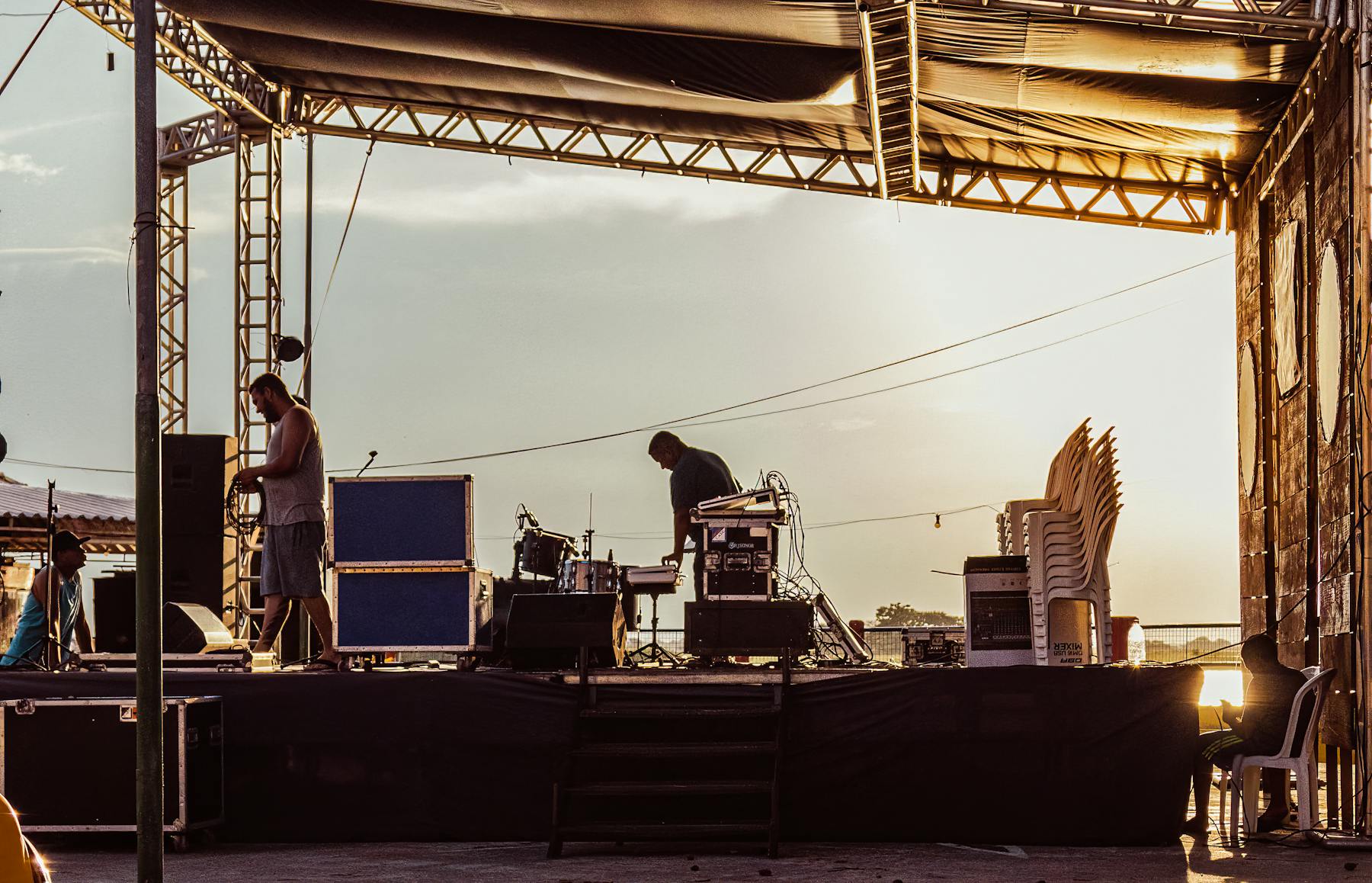
Comparing Indoors, Tented, or Open‑Air Setups: What Fits Your Day
Learn the specific trade-offs between indoor and outdoor wedding settings to select the right environment by comparing how each option impacts safety requirements, power distribution, and overall sound quality.
| Option | Weather Shield | Sound Quality | Safety & Power | Logistics |
| Indoors | Best against rain, wind, heat, and lightning | Predictable acoustics; easier to tune PA | Permanent power; climate control | Faster setup; permits are rarely an issue |
| Tented Outdoors | Good rain and sun cover; not lightning‑safe | More reflective than open air; watch low‑frequency buildup | Requires GFCI, cable management, and professional anchoring | Site access, ballast, and layout matter |
| Open‑Air Outdoors | Most exposure to rain, wind, heat, and lightning | Natural, airy sound; wind and temperature affect the carry | Requires a robust weather plan and safe power distribution | Scenic, but the highest weather risk |
Contracts, Permits, and Curfews
Spell out a weather backup in the performance agreement. Include who decides to pause or move, how long the delay window lasts, what counts as cancellation, and whether an indoor hold exists. At Green Light Booking, we ensure all weather-related contingencies are clearly defined, so you’re protected in case of unforeseen weather events.
Note local noise rules and venue curfews. Many towns set outdoor sound limits or firm end times. If you expect to use a generator, confirm fuel storage, placement, and quiet hours with the venue.
Gear and Logistics That Weather‑Proof Your Band
Familiarizing yourself with specialized gear ensures that technical requirements are met to protect both the musicians and your guests.
- Power and protection: Confirm your venue or rental company provides GFCI-protected circuits for outdoor areas to prevent electrical hazards. Ask if they have cord ramps or covers to keep connections dry and elevated above potential puddles.
- Power generation: If a generator is required, make sure that it’s placed far from guest areas and buildings to keep noise and deadly carbon monoxide exhaust away from your celebration.
- Staging and covers: Prioritize professionally installed tents with proper weights (ballast) rather than simple pop-ups, which are intended for shade but can be dangerous in high winds. Ensure the stage plan allows for lowering backdrops or securing stands if gusts arrive.
- Instruments and monitoring: While musicians handle their own gear, you can help by providing a climate-controlled space (like a green room) for them to store sensitive wooden instruments before the performance. This protects them from the humidity and temperature swings that cause tuning issues. Check if your band has in‑ear monitors to help reduce wind noise and control stage volume when gusts hit.
- Crew roles and comms: Assign a weather lead to monitor official alerts and radar and to call holds. Share a simple code on radios and with the MC for quick, calm announcements.
Sound and Acoustics in the Elements
Outdoors, the air itself becomes part of the acoustic system. Temperature and wind gradients refract sound, making them among the common pitfalls in outdoor weddings. Downwind conditions and nighttime temperature inversions can push sound toward the ground, so it carries farther. Meanwhile, hot, sunny afternoons tend to bend sound upward, so the audience upwind may hear less.
When choosing your ceremony or reception layout, be mindful of the wind. If your ‘Plan A’ involves a cliffside view, high winds can carry the sound away from your guests. Talk to your band about their ‘sound reinforcement’ plan. They may need to bring additional speakers (fills) to ensure your vows and music are heard clearly by the back row.
If wind picks up, angle arrays slightly downward, add front fills near the stage, and recheck coverage upwind to ensure clarity. Our live wedding bands have experienced sound engineers who will adjust the setup to accommodate these factors and maintain optimal sound quality.
Remember that higher humidity generally softens the loss of very high frequencies over distance, while dry air can dull highs faster. Small EQ trims, a gentle high‑frequency shelf, and checking the far‑field mix during soundcheck help keep clarity consistent as the weather shifts.
Examples
These examples demonstrate that with the right adjustments to set times and equipment, a wedding schedule can stay on track even when the weather doesn’t cooperate.
Summer Vineyard Reception
A four‑piece band played on a small open deck with afternoon highs near 94 degrees Fahrenheit and sticky humidity. The planner moved the first set earlier, added large fans behind the band, and stocked chilled water on both sides of the stage.
The couple worked with the planner to move the first set earlier to avoid the peak afternoon sun. They also ensured large fans were positioned behind the band. Because the couple prioritized the band’s cooling, the musicians were able to maintain a high-energy performance without overheating. Guests stayed comfortable, the mix stayed clear, and no one overheated.
Mountain Lodge Lawn, Afternoon Thunderstorms
Forecast showers built into a thunderstorm warning. The contract already named the venue manager as the weather lead. At the first rumble, the manager called a hold. The band muted and powered down, the crew covered pedalboards and racks, and everyone moved into the lodge.
Lightning continued, so the reception pivoted to the lodge ballroom, a backup room reserved in advance. After 35 minutes with no thunder, the band resumed inside on a small PA. The night stayed on schedule, and the couple got a full dance set.
Actionable Steps / Checklist
Following these steps ensures the transition between weather scenarios is seamless and safe.
- Pick your A plan and B plan now; prepare an indoor backup or tented option reserved.
- Assign one weather lead with authority to pause or move the show.
- Use GFCI‑protected outdoor power and keep all connections off the ground and dry.
- Place any generator outside, well away from buildings and people, with exhaust pointed away from openings.
- Stock wind screens, tarps, towels, spare strings/reeds, and a hygrometer with in‑case humidifiers or desiccants.
- Set thresholds in writing; pause on the first thunder; resume 30 minutes after the last thunder.
- Map cable runs, ballast, and safe egress before load‑in; protect cables with ramps.
- Recheck the mix upwind and downwind as temperatures fall after sunset.

Glossary
This foundational knowledge ensures everyone is on the same page regarding safety protocols and the specialized equipment needed to maintain a high-quality performance.
- GFCI: A fast‑acting device that cuts power when it detects a small difference in current flow, reducing shock risk.
- Heat Index: A measure that combines air temperature and humidity to estimate how hot it feels in the shade.
- Temperature Inversion: A layer where air aloft is warmer than air near the ground; it can bend sound toward the surface.
- Ballast: Weights used to secure tents and stage roofs so wind cannot lift or shift them.
- Backline: The band’s core instruments and amps are placed on stage behind the front line of performers.
- In‑Ear Monitors: Earbuds with a personal mix that replace or supplement wedge speakers on stage.
- Run‑Of‑Show: The event timeline that lists who does what and when.
- Carbon Monoxide (CO): A colorless, odorless gas from fuel‑burning engines that can be deadly if inhaled.
FAQ
Q: Can a band play through light rain under a tent?
A: Bands can play through light rain under a tent only if power and gear are fully protected from moisture, and there is no lightning risk. A tent may block rain, but it is not a lightning‑safe shelter.
Q: How hot is too hot for a wedding band to perform?
A: When determining how hot is too hot for a wedding band to perform, the answer depends on factors like shade, airflow, workload, and how acclimated the musicians are to the temperature. Use the heat index as a guide, add shade and water, shorten sets, and move indoors if people show signs of heat stress.
Q: What about generators for backyard weddings?
A: Generators for backyard weddings work when sized and grounded properly, but they must run outside and far from doors, windows, and vents. Never use a generator indoors or under a porch.
Q: Why did the mix sound different after sunset?
A: The band’s mix can sound different after sunset because cooling air and changing wind can refract sound toward or away from the audience and slightly change high‑frequency loss. A quick EQ touch‑up after dusk usually fixes it.
Final Thoughts
Weather can derail a perfectly planned performance, but it does not have to stop the show. When coordinating with your band and venue, choose the right setup, wire it safely, define clear pause and resume rules, and stage a few simple backups. Proactive planning transforms a potential weather crisis into a minor footnote, ensuring that the only thing your guests remember is the incredible music and the joy of the day.
Worried about the weather on your big day? Book Green Light Booking’s professional wedding bands, who are fully prepared to adapt to any outdoor condition.