
Wedding Band Stage Layout Best Practices!

Professional stage layout design represents a critical foundation for wedding band success. The integration of proper equipment spacing, musician positioning, and technical framework determines both output quality and visual appeal. While a basic band stage layout configuration may suffice for casual events, wedding celebrations demand thorough attention to detail in band stage arrangement. Modern wedding band stage layout strategies incorporate sophisticated considerations for acoustics, aesthetics, and functionality that extend far beyond traditional setups. To make things easy for wedding couples, our experienced wedding music bands will completely take care of the band stage layout for you.
The Modern Retrospect band electrifies weddings with high-energy live dance music. Celebrate with this in-demand band for a fun, unforgettable wedding night.
Metro Music Club rocks weddings with a continuous flow of everyone’s favorite dance songs. Make your event memorable with an epic wedding night, courtesy of this popular live band.
Rhinestone Rodeo, a world-class pop/country band, creates lively wedding parties that keeps guests on the dance floor all night long. Enjoy quality live music at your reception with this awesome option.
Essential Equipment Spacing Requirements!
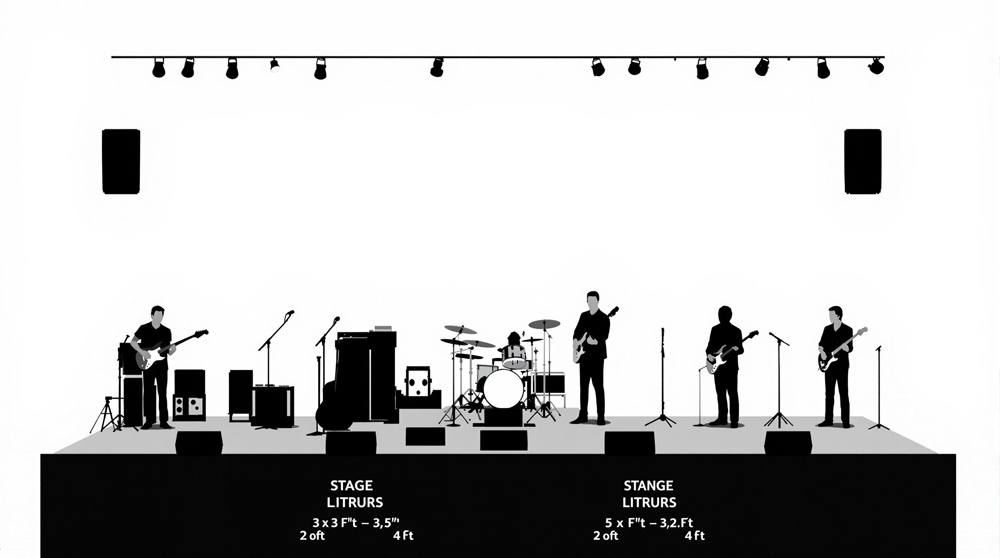
Every wedding band stage layout must begin with proper spacing of essential wedding audio visual equipment to guarantee both functionality and safety. Standard equipment dimensions require a minimum of 4 feet between amplifiers and 3 feet between individual musicians’ setups. The drum kit typically needs a 6×8 foot area, while keyboard stations require 4×6 feet of dedicated space.
Following industry spacing guidelines, microphone stands should maintain 2 feet of clearance from other equipment to prevent interference and allow performer movement.
Power cables and audio lines must be separated by at least 18 inches to minimize electromagnetic interference.
Stage monitors require 2 feet of frontal clearance, while main speakers need 3 feet of space from walls or other obstacles to guarantee proper sound dispersion and prevent overheating.
Optimizing Musician Sight Lines!
Establishing clear sight lines between band members represents a crucial element of professional wedding stage design when determining the wedding band stage layout. Musicians must maintain visual contact with each other to guarantee smooth transitions, tempo changes, and energetic shifts throughout the presentation. The drummer typically serves as the central focal point, positioned where all band members can easily see their timing cues.
Strategic placement of monitors, microphone stands, and instruments should promote musician communication without creating visual barriers. Angling performers slightly inward creates a semi-circular formation that improves both internal visibility and audience engagement.
For larger ensembles, wedding reception stage design should include risers, which can be implemented to create tiered levels, allowing back-row musicians to maintain clear views of the rhythm section and bandleader while remaining visible to guests.
Power Supply and Cable Management!
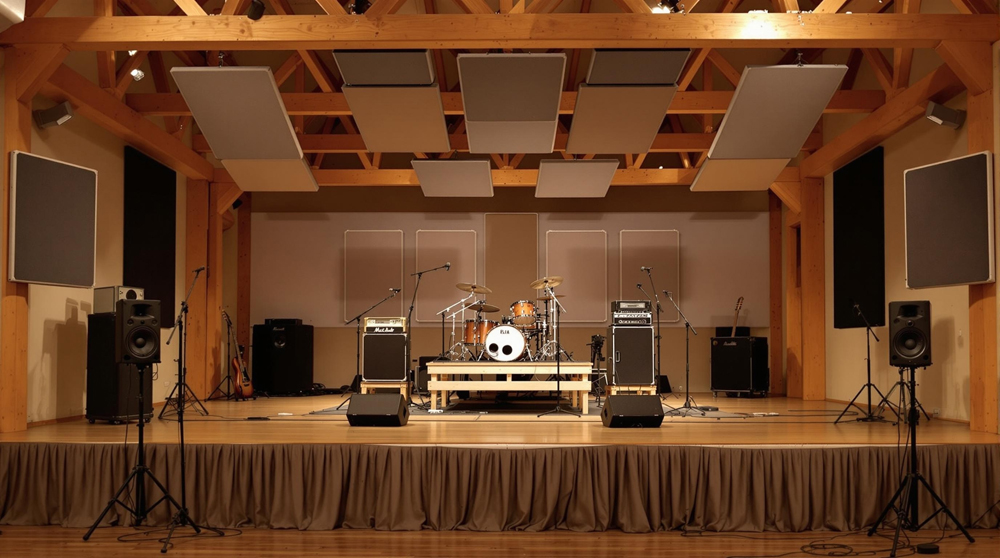
Beyond band stage layout and sight lines, proper electrical planning serves as the foundation for a successful presentation setup. Professional power distribution requires strategic placement of outlets and power strips to accommodate all instruments, amplifiers, and electronic equipment while maintaining safety standards and avoiding circuit overload.
With regard to the performance area setup, efficient cable routing minimizes tripping hazards and maintains stage aesthetics. Audio cables should run separately from power cables to prevent signal interference, with both types secured using gaffer tape or cable ramps.
Live music stage configuration is important due to the number of cables on the stage. Cross-stage cable runs require careful planning to avoid high-traffic areas. A designated power distribution hub centralizes connections and simplifies troubleshooting, while providing surge protection for sensitive equipment. Proper labeling of cables and power sources guarantees quick identification during setup and emergency situations. The wedding band stage layout must take all of these factors into consideration.
Creating a Professional Visual Aesthetic!
A professional band stage layout relies heavily on coordinated visual elements that augment the band’s execution and venue aesthetics. Establishing a consistent visual theme through matching attire, unified instrument colors, and coordinated equipment cases creates a polished appearance.
Professional branding elements, such as backlit logos or custom instrument stands, reinforce the band’s identity.
Strategic placement of decorative elements like floral arrangements or fabric draping should complement, not obstruct, the performance space. Proper lighting with regard to the wedding stage design improves the overall ambiance while ensuring performers remain visible.
The stage layout should maintain clean sight lines by concealing equipment cases, cables, and personal items behind risers or screens. Musicians should position music stands at uniform heights and angles to maintain visual symmetry across the performance area.
Acoustic Considerations for Different Venues!
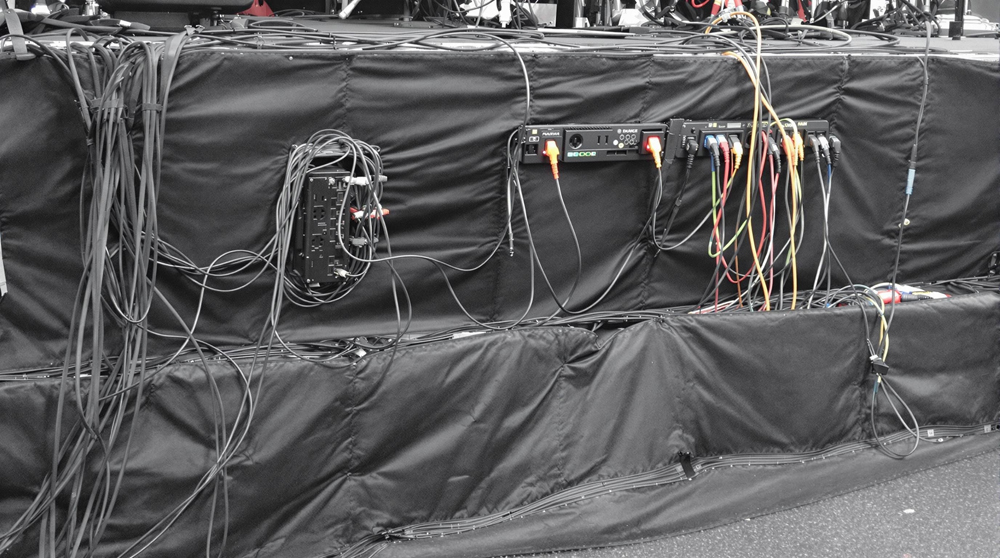
Each wedding venue presents unique acoustic challenges in regards to the wedding band stage layout that require careful consideration during stage setup and sound management.
Indoor ballrooms often need strategic speaker placement and acoustic treatment to prevent sound reflection from hard surfaces, while outdoor venues require careful monitoring of wind direction and natural sound dispersion.
Venue acoustics vary significantly between churches, reception halls, and outdoor spaces. This makes it important to carefully consider the live band stage setup. Churches typically have high ceilings and reverberant characteristics, necessitating reduced stage volume and careful microphone placement. Live music stage setup in reception halls may require absorption panels to control excess reverberation, particularly in rooms with parallel walls. Outdoor venues benefit from directional speaker arrays and windscreens for microphones.
Sound engineers should conduct thorough venue walk-throughs to identify potential acoustic problem areas and implement appropriate remedies before the event.
Stage Size and Band Configuration!
Proper stage dimensions and band configuration play critical roles in presenting polished wedding exhibitions. Standard stage dimensions should measure at least 24 feet wide by 16 feet deep for a typical seven-piece ensemble, with an additional 4 feet of depth required for each row of performers beyond the front line.
The band stage layout requires strategic positioning of instruments and equipment. Drums typically occupy the center-rear position, while keyboard and bass flank either side. Lead vocalists and horn sections command the front line, maintaining clear sight lines with other musicians. Guitar amplifiers should be positioned at 45-degree angles, facing inward to create an optimal monitoring environment.
For larger ensembles, a tiered riser system facilitates proper spacing and visibility while maximizing the available stage footprint.
Lighting Integration and Placement!

Strategic lighting integration alters a wedding band’s presentation from merely audible to visually captivating. Professional lighting technicians position key lighting types at 45-degree angles from the stage front, ensuring even coverage across all band members. These include LED par cans for color washing and focused spots for soloists.
Uplighting placed behind the ensemble creates depth and dimension, while clever moving heads mounted on overhead trusses provide lively illumination effects during show peaks. Side lighting eliminates unwanted shadows and adds theatrical dimensionality. Proper DMX control systems allow synchronized lighting changes that complement the music’s energy and mood.
With the wedding band stage layout, stage monitors and other equipment require consideration in lighting placement to prevent unwanted glare or dark spots that could influence performer visibility.
Sound System Positioning Guidelines!
When considering stage design for a wedding reception, the size of the stage is a big issue. While stage dimensions vary across venues, sound system positioning follows fundamental acoustic principles to improve coverage and minimize interference. Sound check procedures confirm optimal speaker placement for balanced coverage across the dance floor and seating areas.
Key band stage layout guidelines for wedding band sound systems include:
- Main speakers positioned at stage corners, angled 30 degrees inward and raised 6-8 feet above floor level.
- Subwoofers placed centrally under the stage front or ground-stacked beside main speakers.
- Monitor wedges arranged along downstage edge at 45-degree angles toward performers.
- Delay speakers mounted on stands at room perimeter for venues exceeding 2,000 square feet.
Wedding band music planning requires these configurations to guarantee even sound distribution while maintaining clear sight lines and minimizing feedback potential between components.
Weather Protection for Outdoor Setups!

Outdoor wedding presentations require extensive weather protection systems to safeguard equipment and guarantee uninterrupted musical delivery. Crucial protection measures include sturdy canopies constructed from weatherproof materials, elevated staging areas with waterproof surfaces, and temporary structures featuring reinforced side panels for wind resistance.
Critical components of weather protection include proper drainage channels around equipment areas, UV-resistant overhead coverage extending beyond the stage perimeter, and strategic placement of weather barriers that don’t impede sound projection.
Equipment should be positioned on raised areas with rubberized surfaces to prevent moisture damage. Temporary structures must incorporate proper ventilation while maintaining protection from elements.
The band stage layout should include emergency protocols, which state rapid equipment evacuation procedures and backup covered locations in case of severe weather conditions.
Stage Access and Safety Measures!
Implementing thorough stage access protocols with the band stage layout guarantees both band member safety and effective equipment transport during wedding shows. Stage personnel roles must be clearly defined and communicated to facilitate smooth operations during setup and breakdown periods.
Essential safety measures include:
- Designated load-in paths with non-slip surfaces and proper lighting
- Clearly marked emergency exits and backstage pathways
- Secured cable management systems with appropriate covers and tape
- Strategic placement of fire extinguishers and first-aid stations
Emergency evacuation plans should be documented and reviewed with all team members before the event. These plans must identify primary and secondary escape routes, assembly points, and specific responsibilities for each crew member during emergency situations.
Regular safety checks of stage structures, electrical connections, and equipment placement help maintain a secure show environment.